We’d passed the rangers with the shiny new jeep who were looking for a cheetah – they’re so endangered that they can get a protection detail. They were on their phone but with no signal there, presumably it was a satellite link. And then we started to go gently down onto a vast plain where the Masai Mara (Kenya) meets the Serengeti (Tanzania). By the way, Simon and some others pronounced Tanzania “Tanzarnia”.
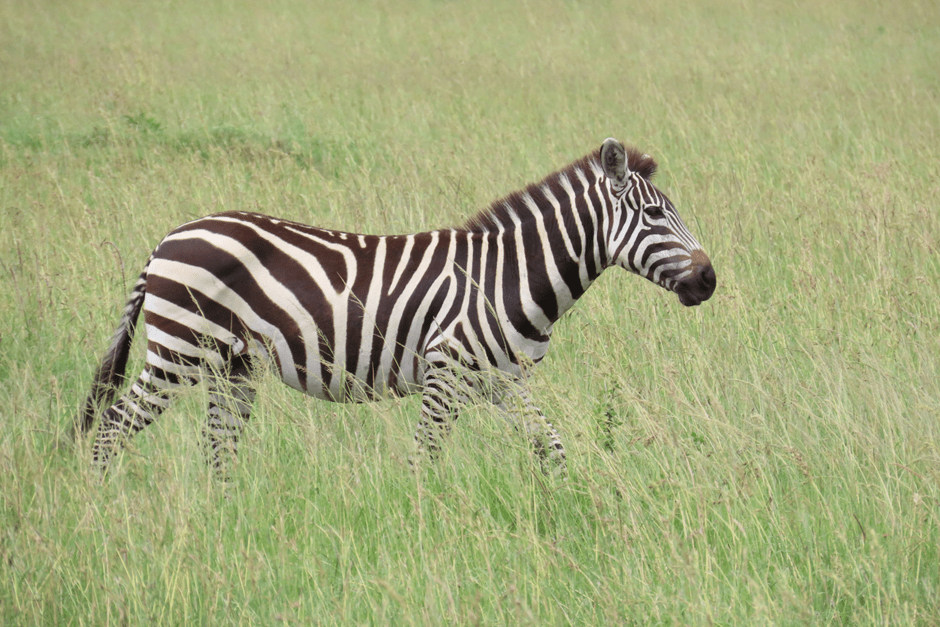
And we saw a lot of animals. The first were hundreds of zebra collectively known as a dazzle (my favourite), but a zeal will do too – a herd is a bit boring. They’re in the same family as horses. They have a similar social structure to lions, in that one male (stallion) keeps a number of females and their offspring in family groups called ……. hareems.

The zebras then became intermingled with other grazers, mainly antelopes and gazelles. Taxonomically, gazelles are part of the Antelope family, but generally smaller. The first ones we saw were topi, an antelope, notable for its termite hill pose while standing guard over the herd.

Then came Thompson’s gazelle, a very pretty animal which we saw a lot of, often in the company of impala, an antelope.

Thompson’s Gazelle
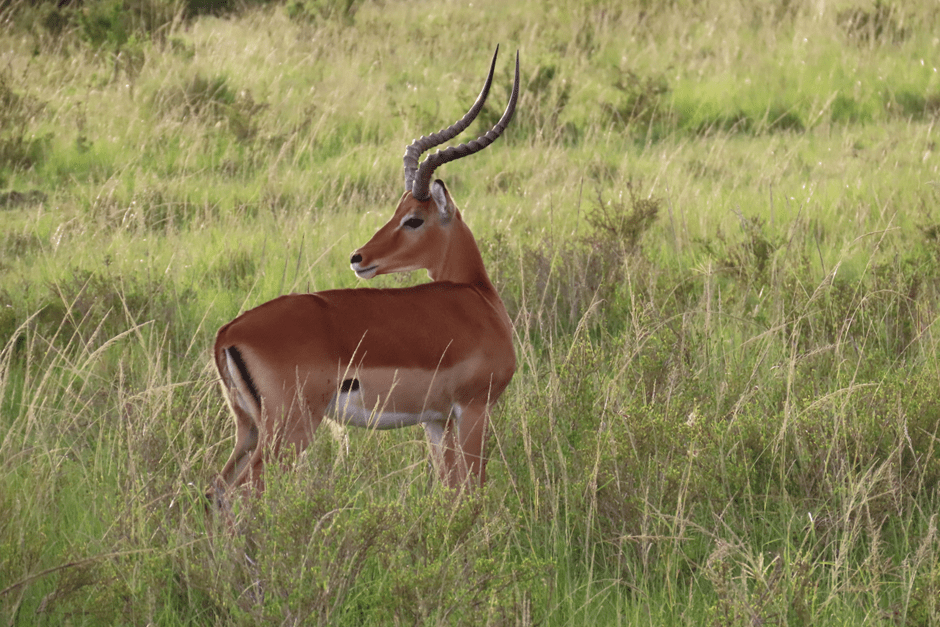
Impala
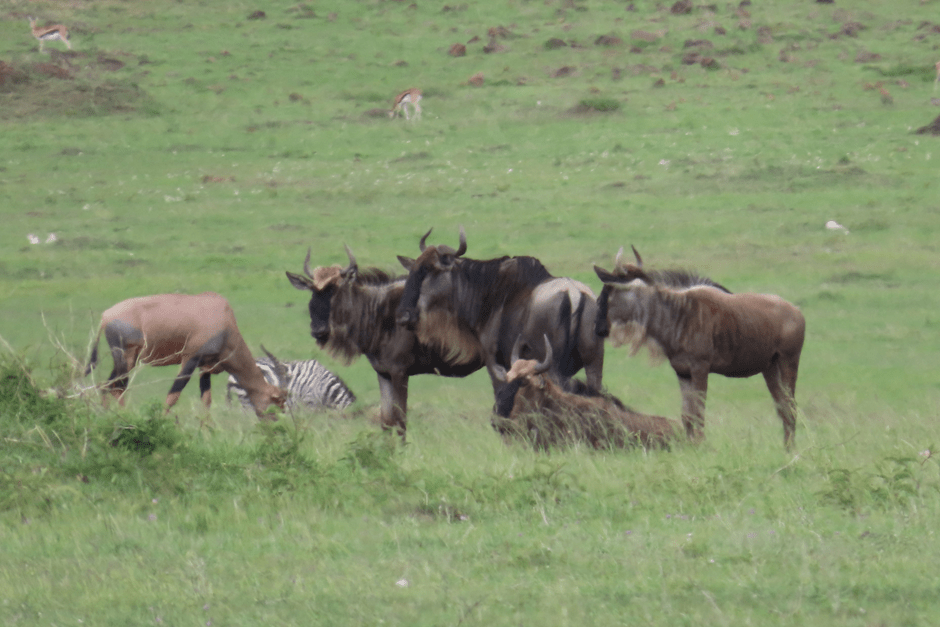
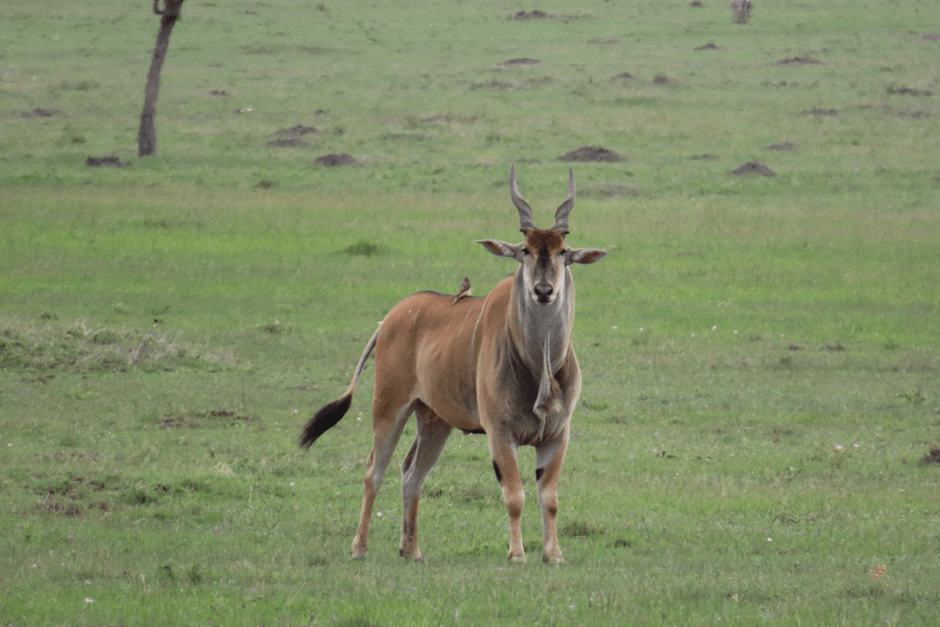
We descended onto the plain that the border runs across and came across other larger grazers of all kinds. There were African buffalo, impala, eland (the largest antelope) and one of my favourites, wildebeest (they always look so morose), as well as many more zebra, topi and Thompson’s gazelle. The collective noun for wildebeest is a confusion, by the way, which has to be based on the madness of their migration every year.
I’d come across eland in word games, but I’d never seen one before, and very impressive they were.
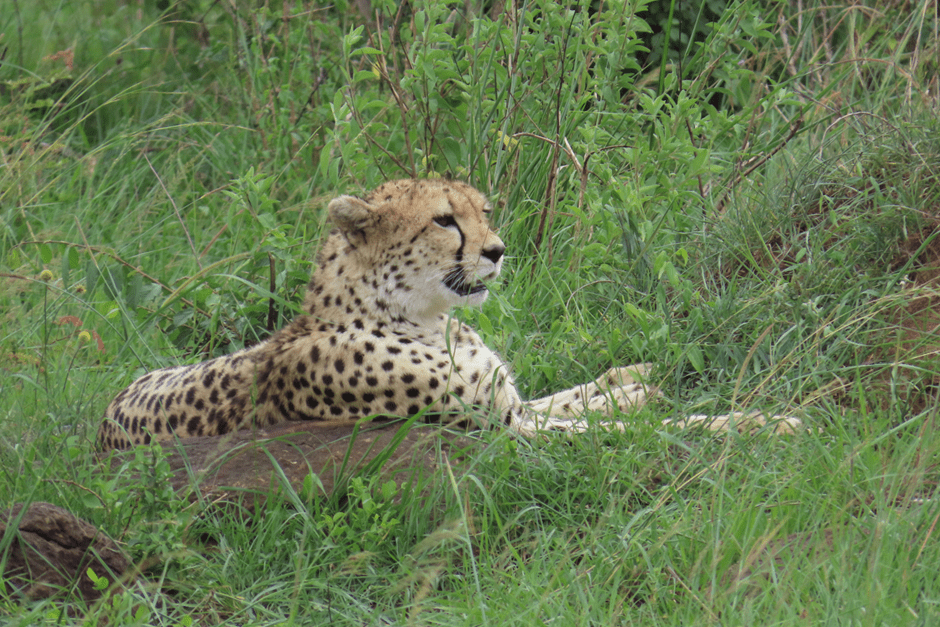
On our way off the plain, the two vehicles we could see in the distance suddenly careered off the road and went up a small rise where there was no track – woe betide them if a ranger showed up. Simon saw what they had seen and followed them. And lo and behold, there was a cheetah, lying on a rock, looking perfectly at ease and seemingly not bothered by these three noisy vehicles that had driven up, the first two (safari tour businesses from outside the reserve) stopping way too close, in my humble opinion.
After we left the cheetah, Simon had a place in mind for lunch. It involved an acacia tree for shade. It was now well after 1pm and his tree was already occupied by another vehicle. Never mind, he said, there are plenty more, as we could see dotted around the landscape. Except they were all occupied too. So we carried on and he found a spot right next to the Mara River, quite a way downstream from our camp, and it was perfect. He produced the table, chairs and food and we had another wonderful meal.

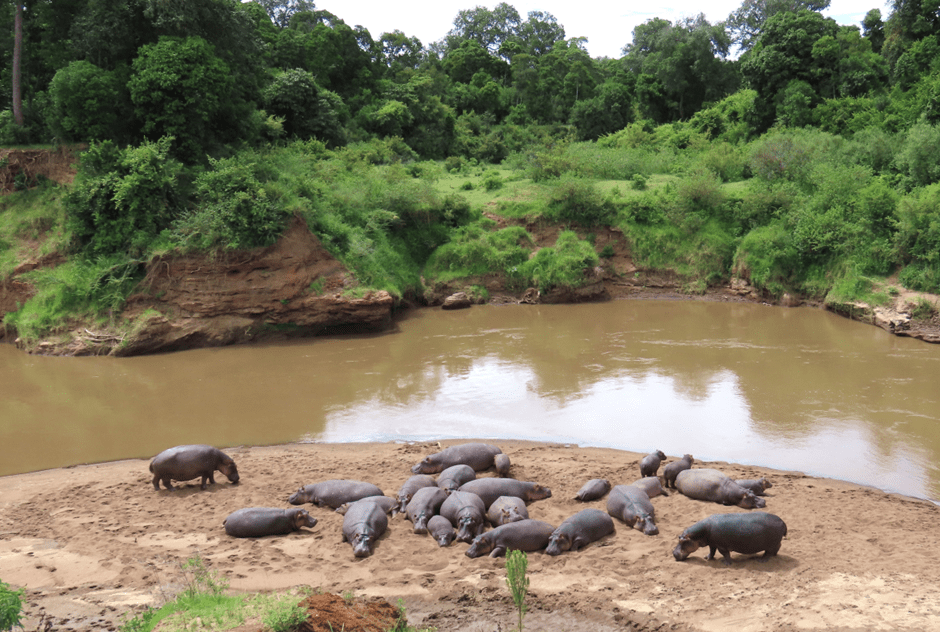
You’ve noticed the shapes in the river behind Sabine. They of course are hippopotamuses. And before you say anything, I googled what the plural is and this is the preferred version, rather than using the purist’s Latin ending as in hippopotami. And what do you call a group of these animals? A bloat. Love it!
The Masai Mara was very green and lush, because there had been an unusual amount of rain in November. The same was true where we were on the beach south of Mombasa afterwards – Mombasa had flooding. On the other hand, there’s a very serious drought in Northern Kenya that started in 2020.

As a result of the rainfall, there was water everywhere – large pools as well as the Mara River, and inevitably wherever there was water, there were hippos. And there were a lot of them bloating – not floating as they stand in the water (to cool down).
The other name for a group is a thunder, maybe because they make a very loud, deep, throaty bellow that can keep people like Sabine awake at night. Especially when one of them is right outside your tent. They’re nocturnal grazers, coming out of the water at night to eat. A path they use from the river below our tent came out into the camp just by us. Not a good idea to sleep walk. This is a photo of the bloat below the camp, sunbathing on their beach before hopping back into the river to cool down again.
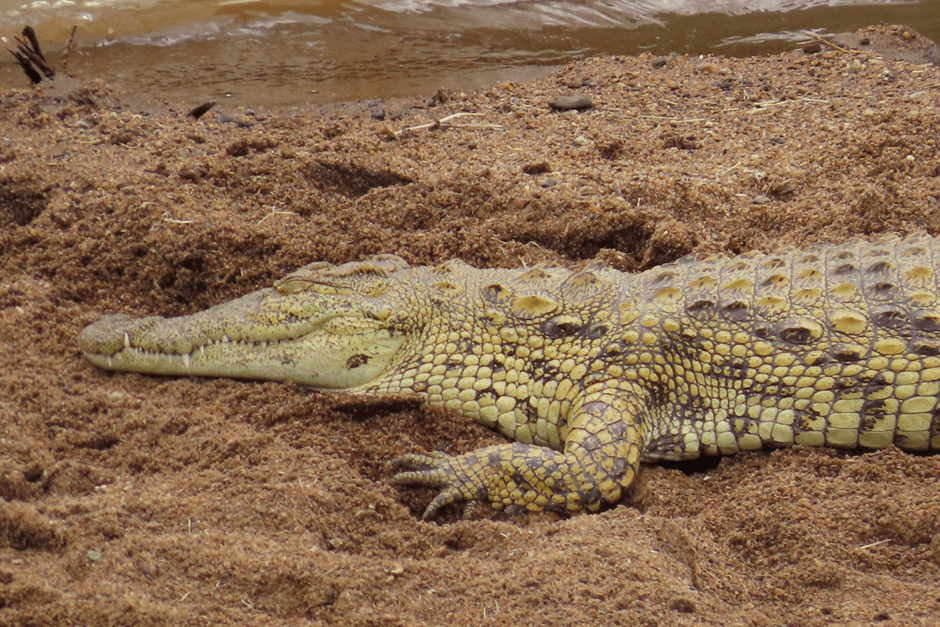
Another animal we saw at lunch (thank you Simon for pointing it out in the distance) was a large crocodile half in the water half out, sunning itself. Too far away for a photo but here’s another one we saw:
After lunch we started wending our way back to our camp, crossing the river at Mara Bridge. Almost immediately we can across two baby giraffes, waiting for their parents to come back and feed them. They were so young, the remains of umbilical cord evident on the photo.

Next we came across another new one to me, Coke’s Hartebeest, which I still think is one of the ugliest ones, no matter what Sabine says. And the termite hill pose might change its view but not mine. You can make your own mind up.

By now, we’d seen four of The Big Five – Buffalo, Elephant, Lion and Rhino. Just the Leopard now. But where was it. Simon’s bush telegraph came through. He knew where it was and picked up speed to get there in time. So did everyone else.
We don’t have a photo that does justice to the mele around this precious animal as all those jeeps jockeyed into position. We were an early arrival, Simon surveyed the scene, correctly anticipated what the leopard would be doing and positioned us perfectly. The later arrivals then set about making a lot of noise (both jeeps and people) as they all wanted a good view of the leopard. Seemingly, the leopard took no notice.
When we arrived the leopard was in some long grass off to our right. Simon told us it had a kill. He looked around and saw a tree off to our left and said we needed to be on the other side of the tree. Some of the other guides had also worked that out too so we followed two or three safari jeeps along some tracks to where they all thought we’d get to see the leopard best.

This is a perfect example of Simon showing us animal behaviour that I mentioned in the last story. He said the leopard would gradually make its way across the road where there still jeeps parked carrying its kill in its mouth. It would find this difficult, so would stop and rest quite often. It would head for the tree. There it would leave its kill in the long grass, recce the kill, return and rest for a longer time, then carry its kills to the base of the tree and climb the tree with the kill in its mouth. It would take the kill as far up the tree as possible. It was just after 3pm and he reckoned it would be about 4.15pm by the time it climbed the tree, so were we happy to wait? Yes, absolutely.
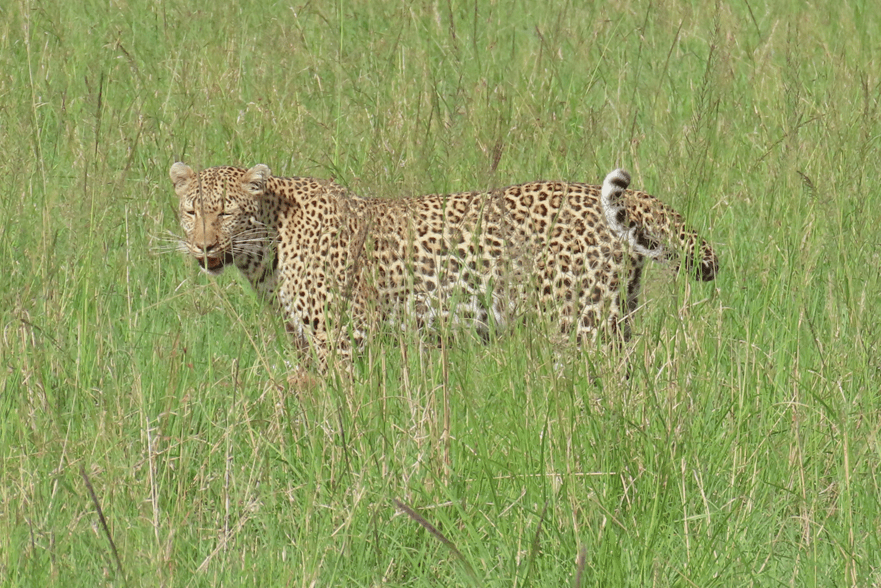
And that is exactly what happened.
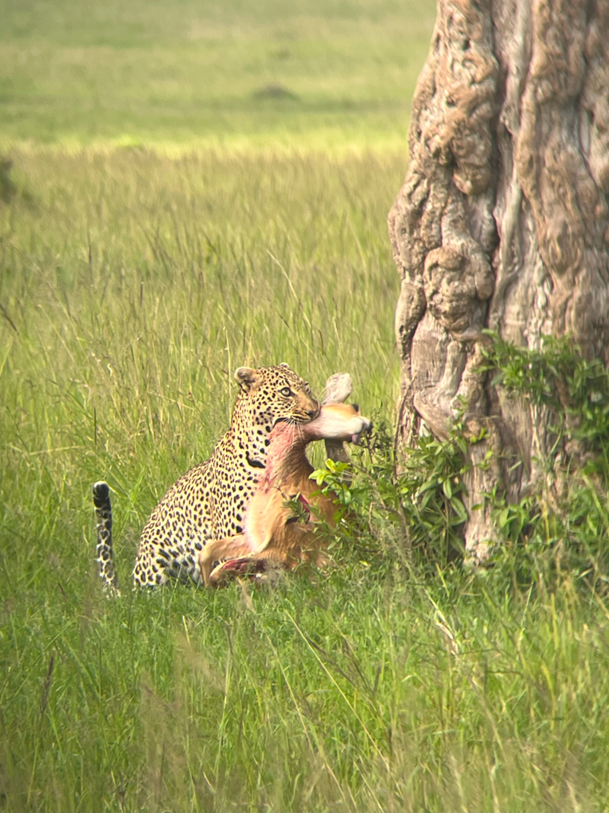
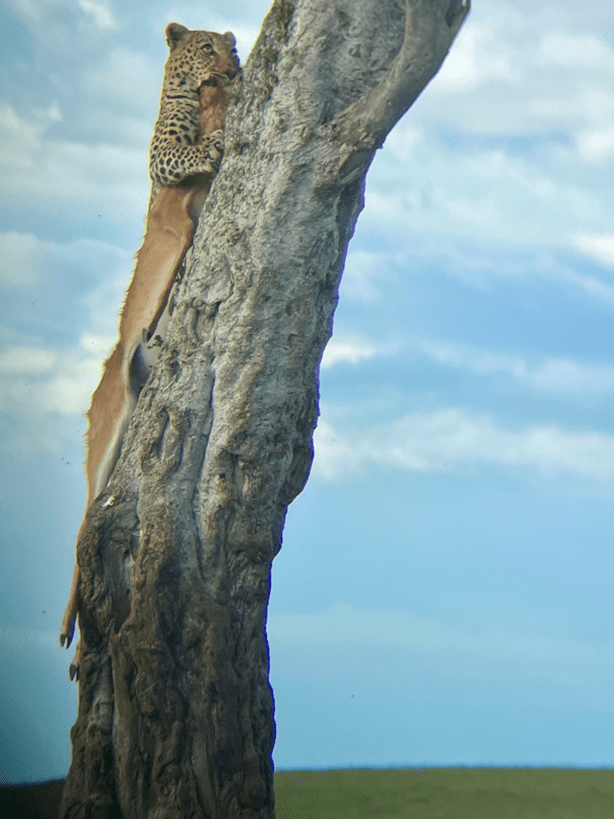
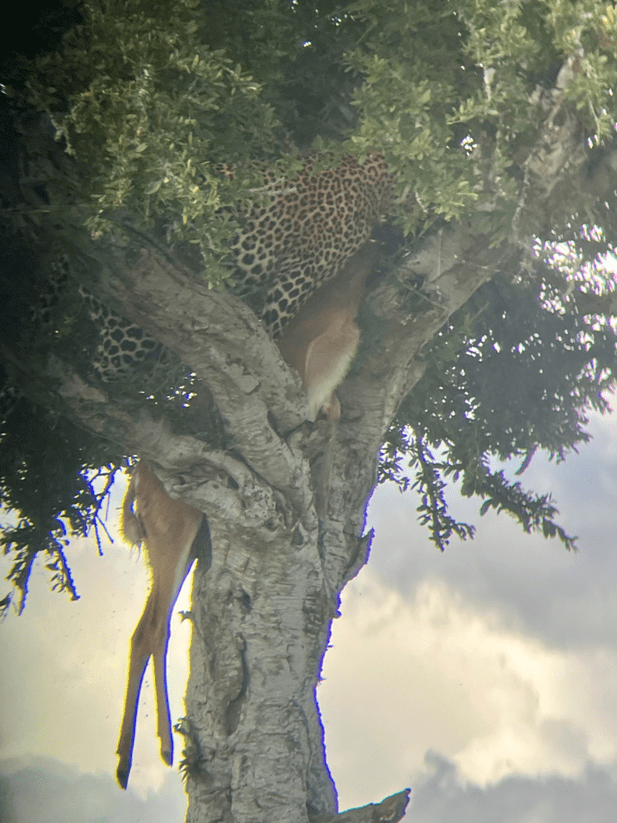
Except it was closer to 4.20pm.
The kill was a female impala, by the way. A guide on a previous safari in Kruger called them “fast food”, because they were very agile and speedy, and a favourite dish for their many carnivore predators (obviously not fast enough). The females are preferred as they don’t have horns.
The tree provides security from hyenas which, once the leopard starts to eat the kill, will smell it and wait at the bottom of the tree in the hope that some part of the animal will fall to the ground. They can’t climb trees so the leopard and its kill are safe. Without the tree, the leopard would be soon in danger of losing the whole kill to the hyenas. Nasty animals, but that’s nature’s way.
And on that happy note, obviously not for the impala and perhaps not for the hyenas either, but definitely for us having seen the leopard and having seen it do precisely what it would do naturally, we got on our way again, with 2 hours of daylight left, now heading for home.
There were some more incredible sites ahead, though.
 Pete's Perusings
Looks like quite the trip!!
LikeLike
Glad you liked it. And yes, the leopard was a definite highlight. Working on the third animal part now.
Claire gets the stories automatically now because she hit the SUBSCRIBE or FOLLOW button and put in her email address, so if you can do that, it will work the same for you. I’ll include you in the email with the link I send round to others if you can’t do that (as others haven’t).
LikeLike