Tag Archives: wildlife

Western Cape Wildlife – Part 2

  • Cape Mountain Zebra

Now we really came into our own in Dominic’s eyes.  We were at the end of the day’s tour, on a road running next to the Nature Reserve delimited by a fence on our left with scrubland beyond.  We noticed some bontebok grazing.  Then Sabine said – Oh, is that a zebra with them? – followed by  screeching brakes and an emergency stop.  Dominic got all excited once again – a rare Cape Mountain Zebra that he hardly ever sees, conservation status Vulnerable. 
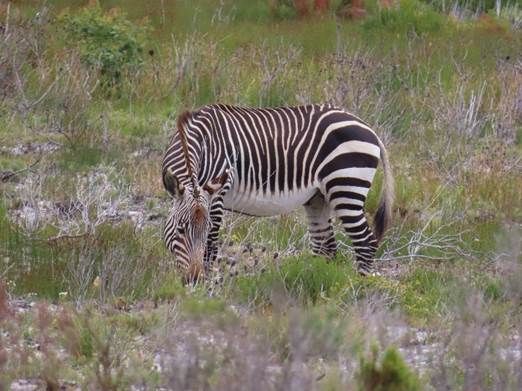
It’s the smallest zebra species with narrower and more numerous vertical stripes and wider horizontal strips on the hind quarters.  It is only found in the Cape Province, historically the most populated region of South Africa and hence hunted virtually to extinction by the early settlers.

  • Quagga

It seems only fitting to next show you the other zebra we saw, this one on the Idiom Nature Reserve attached to the winery and restaurant, owned by one of Sabine’s Summer School “students” and her husband. 
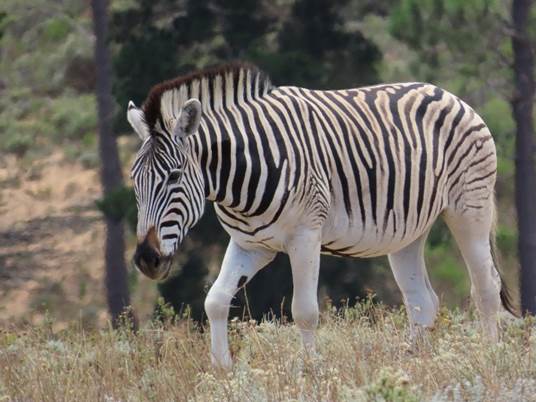
This breed is actually extinct (in the wild by 1878 and in captivity five years later) but advances in genetics and breeding techniques have spawned a project to bring the species back to life.  But not everyone is enthusiastic about it:

https://nypost.com/2024/11/11/science/scientists-divided-over-resurrection-of-extinct-quagga-species/

https://en.wikipedia.org/wiki/Quagga#:~:text=The%20last%20wild%20population%20lived,animal%20whose%20DNA%20was%20analysed

The debate seems to centre around two things – whether it was ever a separate species and the use of a strain of plains zebras that had similar markings to bring it back to life.  You can easily spot that the rear is very different from the markings of both the Cape Mountain Zebra and the regular plains zebras below that we saw a lot in Kenya.  But if you click on the Wikipedia link, you’ll see that it doesn’t look much like the 1870 photo of the one held in London Zoo.  I’m no expert of course but I must admit that I think the shape of the new ones looks very much like that of the plains zebra (collective noun: a dazzle 😊).

  • Springbok

Less controversial is the little antelope that the national rugby team is named after.  We saw them in the Idiom reserve alongside the quagga.  South Africa has a lot of antelope of different sizes and camouflage patterns.  In the bush, they are fearful of predators (one ranger described them as Fast Food).  To say that, generally, antelope in the wild are always on edge is to put it mildly and for good reason, given that our group actually witnessed 9 female lions kill an impala in Kruger what is now 15 years ago. 
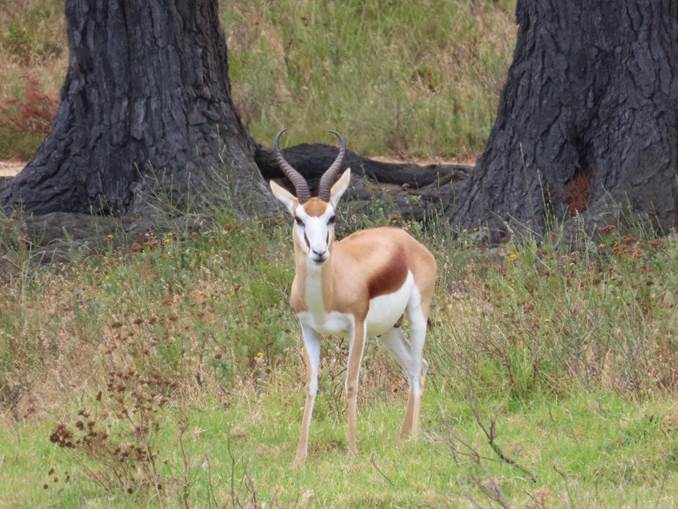
The Springbok we saw here were a lot less nervous, probably given that the reserve didn’t boast the predators of the wild, and I have to say they are probably the prettiest of all the antelopes I’ve seen in Africa.
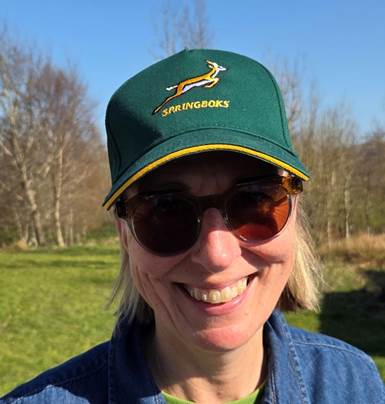
And talking of pretty, here’s the rugby team’s emblem, modelled by Sabine.

  • Cape Dwarf Chamaeleon

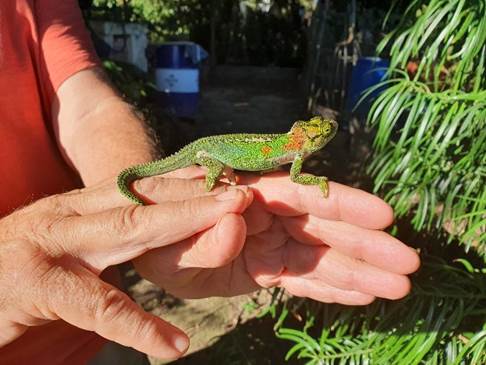
We were in the David the potter’s garden in Swellendam with Garth’s birding friends when Kevin, one half of this couple, suddenly had this chameleon on his hand.  He’d seen it in the bush (also in the photo) and had grabbed it to show us.  Quite amazing.  Presumably if he’d held on to it for much longer, it would have changed colour to pink to blend in with his hand.

They are found only in the southwestern Cape around Cape Town.  They are insectivorous and, while very slow moving, catch their prey with a very fast moving tongue.  Interestingly, their eyes can move independently of one other.

  • Cape Fur Seal

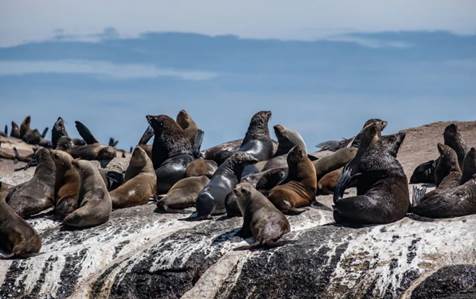
I wasn’t that interested in them (hence this isn’t my photo) – there were birds on the shore that I wanted to see, the seals were just lying around all cuddled up or maybe going for a swim and were a bit comical trying to move around on land on their tummies.   And in any case, I’d seen grey and common seals in the Murray Firth. 

But Dominic gave us some information about them that was a bit unusual.  First their numbers have soared recently because of orcas predating the great white sharks that in turn preyed on them.  The sharks have all but disappeared from False Bay where a lot of the Cape Fur Seals live, so they have no natural predators.  However, Mother Nature loves things to be in balance and after it was noticed that the seals have been behaving more aggressively, it turned out that they now have rabies, contracted possibly from a seal being bitten by a jackal.  Swim at your own risk.

  • Mongoose

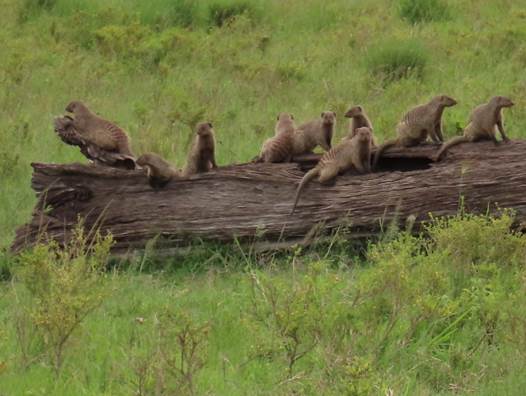
We only saw one fleetingly on the walking bird tour morning with Lynette, so here’s a photo of a mob of them we saw in Kenya (plural mongooses, not mongeese, other collective nouns being pack, troop, gang).  These ones are banded mongooses, but while the one we glimpsed outside Outshoorn could have been the same, other options include the Cape Grey, Slender, and Yellow.

  • Vervet Monkey

We were on a nature trail in Wildness (now misnamed as it is anything but wild in the most part – very touristy and built-up in the narrow strip between the Indian Ocean and the lakes at the foot of an escarpment.  Cutting into this ridge was the nature trail we were on, a valley lengthways like a Y made by a couple of streams coming together.

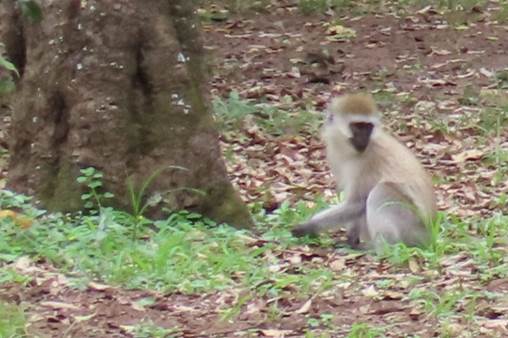
Sabine saw it first, about 3 metres up on a branch in a dense foliage – hence no photo.  It was quite shy, seemingly not afraid of humans in that it didn’t disappear into the undergrowth but sat looking at us.  So we got a good look at it.  In fact we saw two of them during the walk, both totally uncooperative when it came to having their photo taken, so here is one from Kenya.
  • Dolphin

On our last Sunday, we were invited to lunch by David, another of Sabine’s “students”, a GP who after retiring at the tender age of 53 went to Canada with his wife and undertook a series of 2 year-long locum roles all over the country including Haida Gwaii in northern BC and First Nations land, and also Churchill, Manitoba where Inuit were his patients – hence his interest in Sabine’s course.  He and his wife have only just returned to Cape Town – in their time in Canada they have seen more of that vast country than any Canadian I know.  Theirs is one of those fascinating life stories I mentioned in the previous story “What a surprise”.

Anyway, lunch was at the waterfront Radisson in sight of Robin Island and to our delight a pod of dolphins swam past while we were there.  What kind they were I have no idea – Bottlenose or Heaviside’s, Common or Humpback are the four options, but in reality it simply felt like a privilege to see them glide by so gracefully and silently close to where we were sitting.
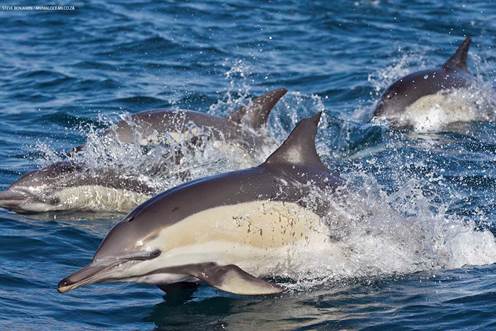
Common Dolphins

And that completes the list of the non-bird wildlife we saw in our January/February 2025 trip.  It was a trip experience bonus added to the lovely people we met, to Sabine’s lectures and the “student” appreciation she received, to Cape Town and the parts of the Garden Route we visited and to the birds we saw (their story is next).
Western Cape Wildlife – Part 1

I’ve had to split this story in two – too much to say in one post.  This trip wasn’t meant to include a safari of any kind, but we did manage to arrange some birding day or part-day tours that brought us close to non-bird wildlife.  Here’s what we saw.  What struck me was the variety and also how much depended on luck – seeing most of the animals was random, the luck of the draw, completely unplanned (just like birds).   I’d never heard of a lot of them, so I’m guessing neither have most of you.  Each in their own way were quite special.

About half of them we saw with Dominic, the Fynbos (pronounced Fainboss) Guy on the two one-day tours in Cape Town and in the Cape Point Nature Reserve.  Despite being British, he was very knowledgeable – he came out when he was 19, and started off guiding for safari lodges in Botswana before moving south and setting up his own business.  Each day was different and fantastic.  The other main exposure we had to non-bird wildlife was with Andrew, the ranger at the Idiom Winery Nature Reserve, who took us for an hour’s game drive.

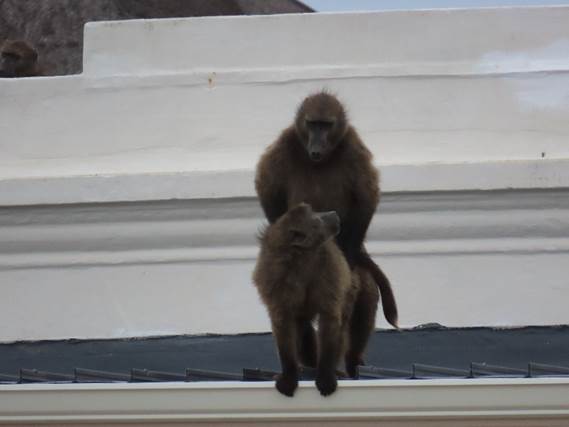
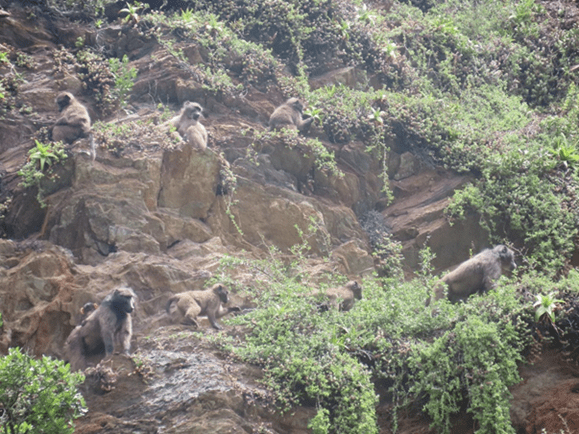
  • Baboon

Baboons were everywhere and have become an urban pest.

This might be why there are so many of them 😊

And this is more like where they belong

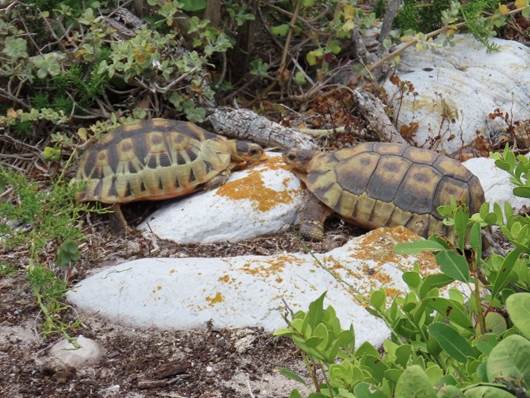
  • Angulate Tortoise

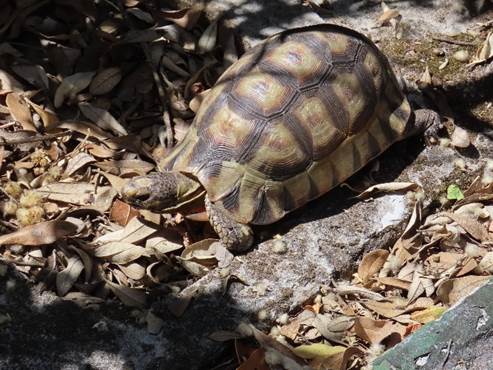
We came across them in two locations and their conservation category is Least Concern.  Contrary to a tortoise’s reputation, they can move quite quickly when they want to and they are easily camouflaged in the undergrowth.  They’re very territorial and in the bottom photo, two males are facing off – the one on the right came out on top.

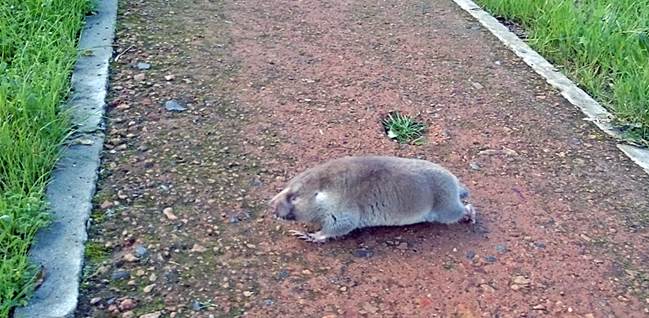
  • Cape Dune Mole-rat

We’d only just been talking about moles and mole-rats when Dominic spotted a mole-rat by the side of the track at the sewage works.  It scampered away from us as we went to get a closer look, so this is a picture taken by someone’s camera trap.  Dominic was very excited because you don’t usually see them in daylight as they live most of their lives in burrows in sandy soil.  He said it was either ill or looking for a mate and it didn’t look ill.  They’re fat and ugly with projecting pairs of top and bottom teeth – being mostly blind, presumably looks aren’t important to other dune mole-rats.

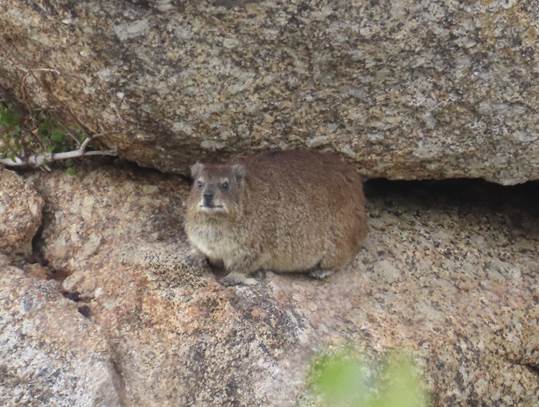
  • Dassie

We saw several dassies on Boulders Beach, Simonstown in the same area as the penguins.  Go Wild provides this description of them – fortunately or sadly, we didn’t see any heart-stopping capers:

They’re small, cute and rather special – rock hyraxes, also known as dassies. Visitors of the South African coastline marvel at their heart-stopping capers among the rocks, cheerfully ignoring the plunging chasms below.

They may look like groundhogs, but their closest taxonomic relatives are actually the elephant and the manatee. (My note – what????)

And that’s not the only odd thing about them. Dassies are distinctly sociable – in their mostly harmonious family life, of course, but also in squabbles among themselves. Unusually for herbivores, their foraging needs only take up an hour or so of every day, leaving these sun-loving creatures plenty of time left for playing, snuggling or just lounging around.

They have some pretty unusual anatomic features too: the irises of their eyes can contract to such an extent that they can look directly at the sun, and the soles of their feet are retractable, which makes them extremely well-suited to climbing around their rocky habitat. And last but not least, the male dassie can sing – at least when he’s courting the lady dassie of his dreams. All in all, they are a peaceful bunch but when cornered, they can be fierce adversaries.

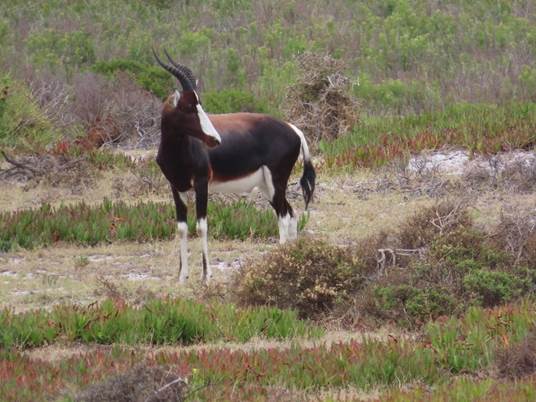
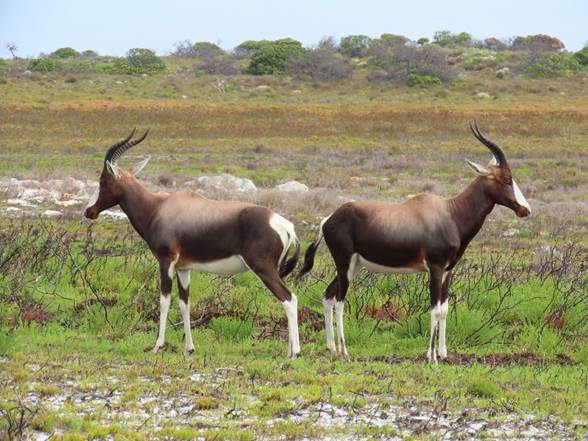
  • Bontebok

It’s all in the Afrikaans word bont, meaning colour.  Man has not been kind to these beautiful animals – by the early 1800s, there were 17 left after they had been hunted to virtual extinction for their meat and skins.  These 17 were fenced in by a farmer and unlike other antelope species, they couldn’t jump out.  So today, while they are still protected in the wild – there’s even a Bontebok National Park at Swellendam set up for their protection – we can enjoy seeing them (3,500 of them according to San Diego Zoo which takes part in their continuing conservation programme).

  • Rote Hartebeest

These are weird looking, aren’t they?  But Dominic was very excited at seeing these as well because he has seen them only rarely in the Cape of Good Hope Nature Reserve, even though through Southern Africa they are not in danger.  Our stock as clients was increasing by the minute given the range of beasties we were seeing with him.

  • Cape Crocodile (Black Girdled Lizard)

Dominic gave us lunch in the shade of the Nature Reserve tourist office.  On the way back to the car, we saw this lizard coming out of a wall, looking amazingly like a baby croc.  While they are not found outside the Western Cape, they are locally abundant in rocky areas from sea level to the mountain tops.  Despite their restricted location, they are not endangered – even though they are very popular as pets (ugh!).

  • Green Milkweed Locust

Dominic found this bug. Having never seen a locust before, it seemed harmless enough but then I read the de Wets Safari website entry – the photo is theirs too:

“The Green Milkweed Locust, or African Bush Grasshopper, is a large – up to 9cm long – poisonous locust that can congregate in enormous numbers (as we experienced on Sunday at the Walter Sisulu National Botanical Garden, apparently an annual occurrence there in September and October), and may migrate over great distances, flying strong and high. They feed on toxic plants and are rather sluggish on the ground, preferring to stay in trees and bushes and flying between them. When feeling threatened they will raise and rustle their wings and exude a noxious foam (poisonous if ingested) from their bodies as defense. Eggs are laid in the ground and the nymphs (also called “hoppers”) are highly gregarious, moving around in tight clusters until they are almost fully grown.

And yes, they scare me. Terribly.”

Kenya – Part 4c

This last instalment is about 12 months overdue, so my apologies to you all.  I got busy last year with other things (Hospice treasurer, a lot of travel, and the house in Rhu) and, as I need a lot of uncluttered time to do the writing and the thinking behind it, I got out of the habit and with it lost the motivation.  Our recent trip to Cape Town and the Garden Route has restored my interest in storytelling though and as we saw another wealth of birds and other animals, and as I’ve just uploaded the photos I took and as the weather is absolutely appalling right now in Rhu, it’s time to get back to it.

On our last game drive, and after we saw the pair of Southern Ground Hornbills I wrote about in Kenya 4a, Simon took us to a glade which turned out to be quite bird rich.  Two birds got our attention in particular, the Woodland Kingfisher and the Paradise Flycatcher.

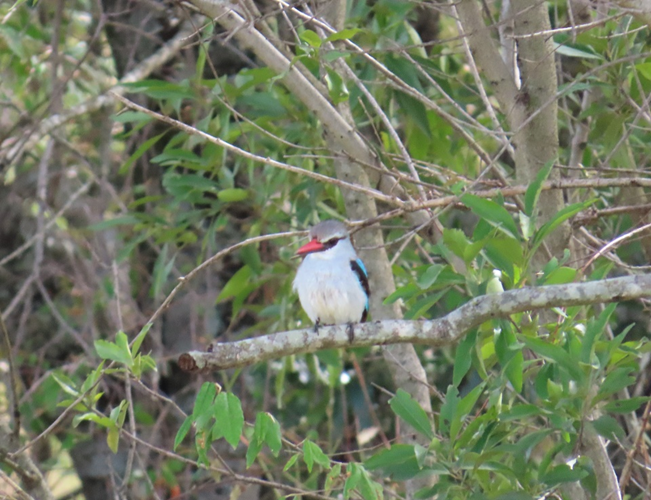
Woodland Kingfisher

I wrote about two other Kingfishers in Kenya – Part 4a, the Grey-headed and Malachite.  But this one was just sitting in a tree with no water nearby, so very much not the habitat with which we Europeans associate kingfishers.   And while it’s not the best of photos, you can see just see the brilliant bright blue wing panel, a colour that it also has on its back and tail.  And note the large almost out of proportion beak, upper mandible red, lower mandible black.

It’s fairly common within a band across Africa south of the Sahara to Pretoria (not as far south as Cape Town).  It eats insects and small reptiles but doesn’t need water to house its diet.  Wikipedia notes that “It hunts from an exposed perch, often on a dead branch of a tree, or perches quietly in semi-shade while seeking food”, the latter being exactly what the one we saw was doing.

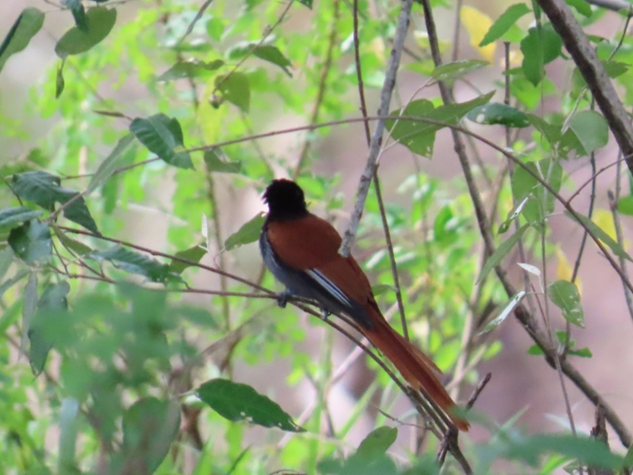
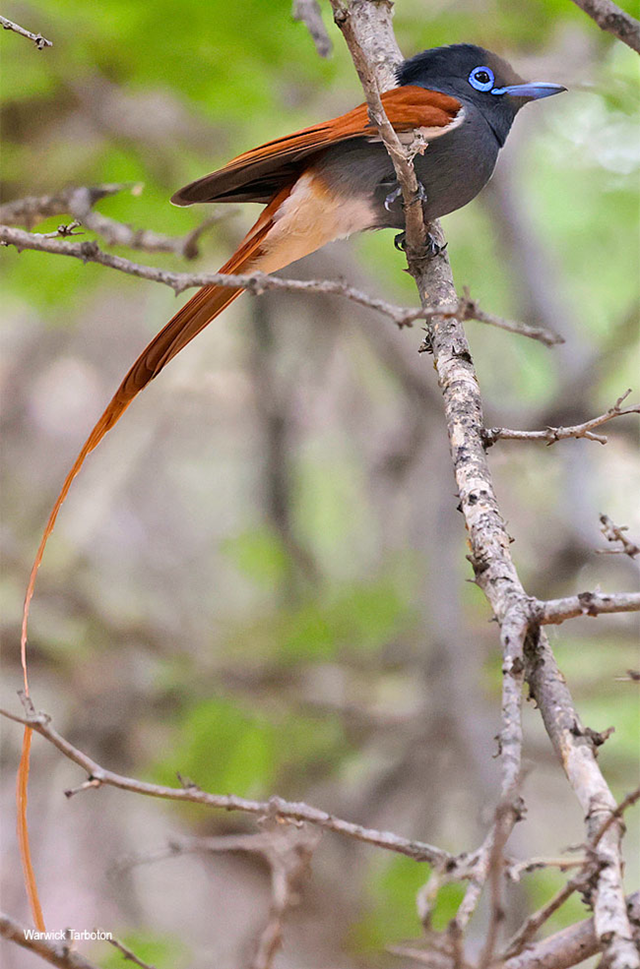
African Paradise Flycatcher

In the glade, we had the absolute pleasure of seeing first the female and then the male.  Both were unbelievably beautiful, the male more so as is normal in the bird world.  They are similar in colouring but the male has a much long tail.  My photos of the female aren’t the best, but I think you can get the idea by combining the two (I love the punk crest and even she has quite an impressive tail) but the male was not as obliging, so thanks to the Waterberg Bioquest website for their photo which shows the very long tail and the strong blue eye ring to great effect.

These extraordinary birds are widespread, favouring well-wooded river or stream valleys and copses, but may also be found in suburban gardens – what a treat that would be to find a pair in your garden!

Vultures

From the beautiful to the positively ugly.  Natural selection has favoured the development of bald heads so as to make burying their heads in the blood and guts of carrion less of a hygiene issue, but as a consequence made them quite grotesque looking, at least to my mind.  Still, they are an essential part of the biosphere and indeed are a great indicator of a healthy natural life-cycle environment.

I mentioned this next part in Kenya 3c.  The return part of our long day trip to the Serengeti took us through lands where the Masi had encroached with their cattle and where, during the night before, lions had attacked the herd and killed at least six, but more likely eight or ten cows.  Not a great outcome for the Masi nor for the conservation-minded Masi Mara park rangers who didn’t need lions attacking very easy prey but nevertheless the wrong kind of animal. 

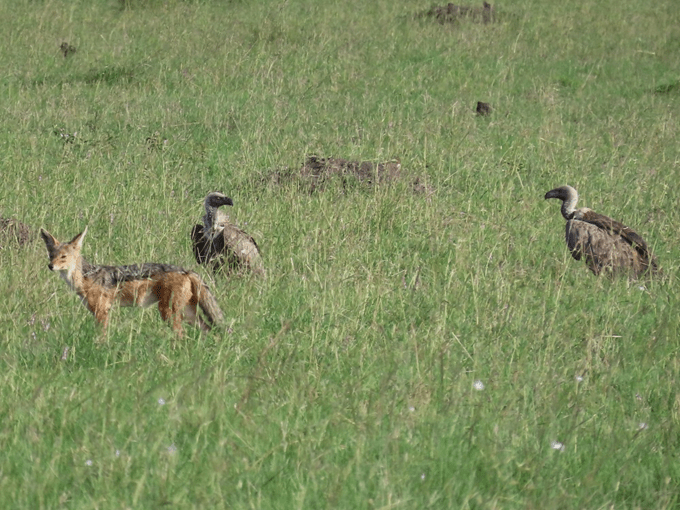
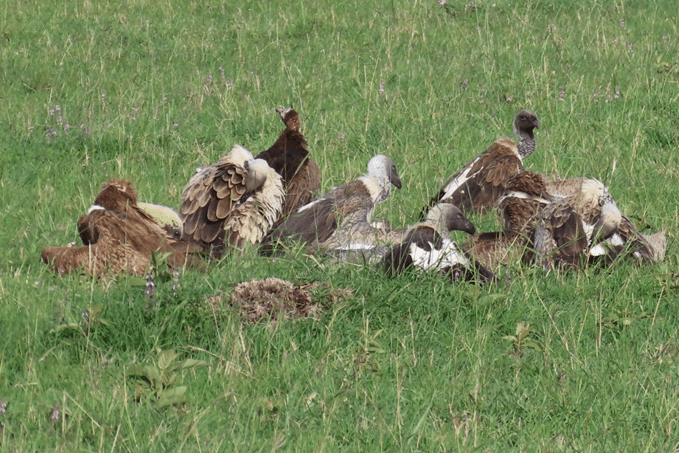
When we drove through the area, some of the lions were still feasting but others were fast asleep, having gorged themselves on the raw steak and tastier offal, leaving the carcasses to be finished off by hyenas, jackals and, of course, vultures – lots of them.

Jackal and White-backed Vultures

And there definitely was a pecking order (pardon the pun).  The vultures came last – if mammals were at the carcass, some of the braver vultures might try their luck as well, darting in for a beak-full before making a quick retreat, but for the most part, the vultures were standing in huddles a safe distance away waiting their turn, while the sky was full of late arrivals flying in to join the banquet.

In total, we saw 5 different species in this melee (and a sixth, a Palm-nut Vulture, on the coast south of Mombasa).  Below is the huge Lappet-faced Vulture with its massive beak and wings spread and by comparison the much smaller Hooded Vulture on the left.

Not mixing with the others was this Egyptian Vulture.  I last saw one of these flying across the autobahn back to its roost at the Salzburg Zoo in 2018.

The final species was the Griffon Vulture, and I remember Simon being quite excited as it was a rare vagrant.  I don’t have a photo, sadly, doubly so as I read subsequently that there is some dispute in birding circles as to whether these birds are actually the more common immature Rüppel’s Vultures.  Who knows but I’ll happily take my lead from Simon.

Widows and Bishops

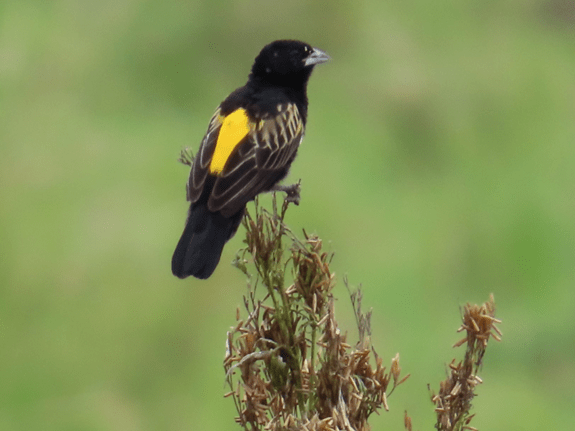
Yellow BIshop

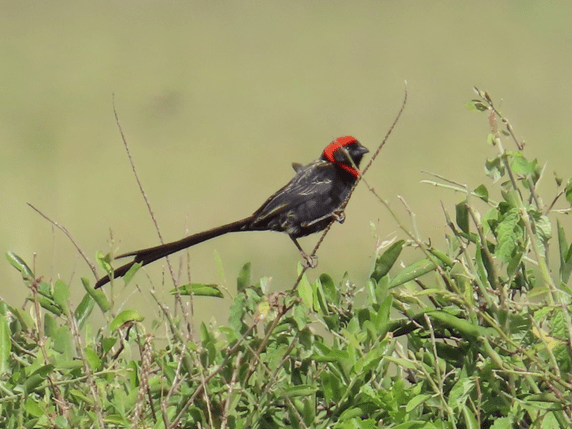
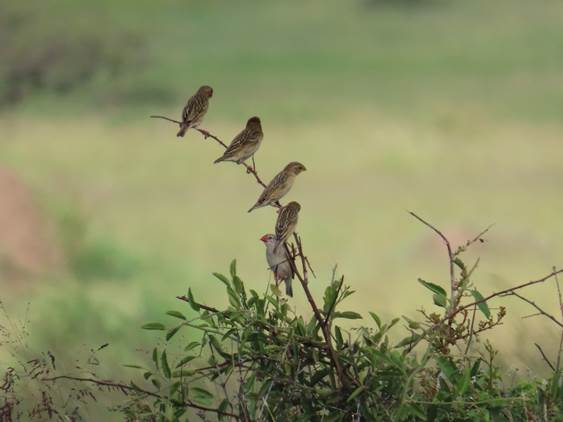
Once again, in the UK or Europe we have nothing like these types of birds.   Bishops are in the same genus as Widowbirds, most of which like the Red-collared Widowbirds below have really long tails.  Both like the open grasslands and from their beaks, you can see they are seed-eaters.

Whereas we saw the former on its own, the latter is polygamous and sure enough we saw him with his harem of about five females. We saw these birds a few times when we passed a scrubland area with bushes and high grasses.

Storks

The word “stork” seems to be used liberally in the birding world t describe the birds belonging to several genera and families.  The white stork migrates from Africa to  Europe where it can be seen sitting on top of chimneys or specially built roof nesting platforms, as we found in little town of Rust on the shores of Neusiedler See in Austria.  Except we didn’t see it on this safari.  However, we did see several other types of stork.  

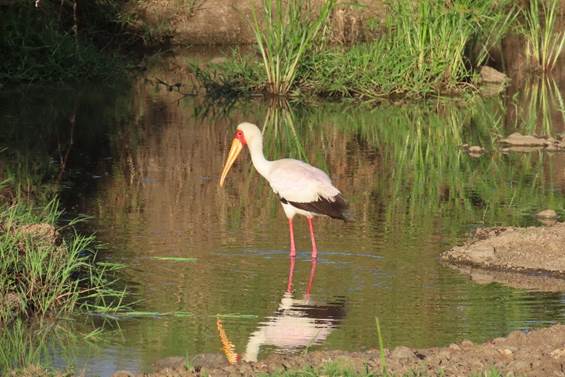
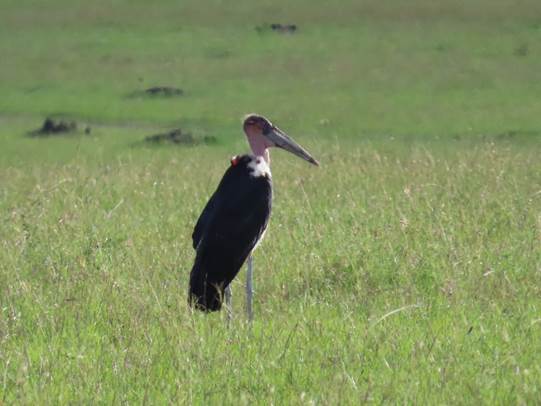
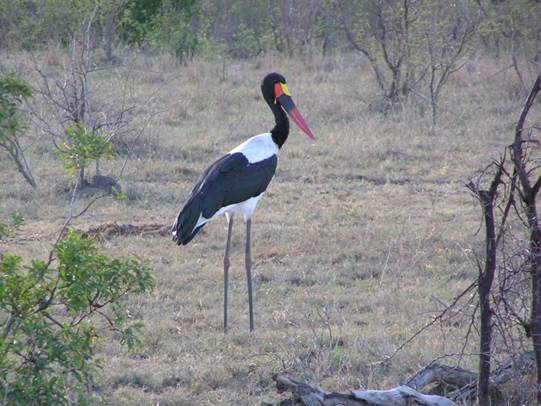
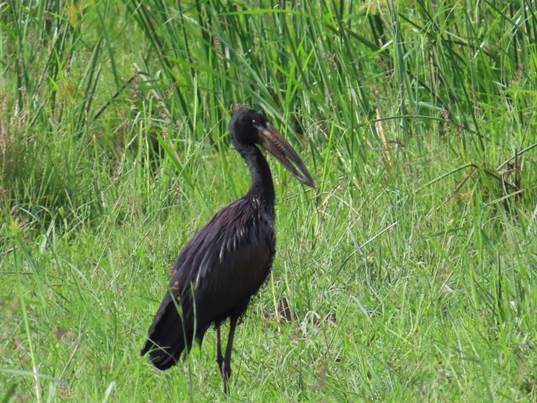
This rather attractive Yellow-billed Stork above was in a reflective mood standing in a shallow waterhole towards the end of day, but was quite different from the ugly Marabou Stork (looks almost vulture-like with its bald head), different again from the stylish Saddle-billed Stork with its amazingly striking beak, and very different from the strange-looking aptly named African Openbill, also categorised as a stork, as shown in the three photos below (the Saddle-backed Stork is from an earlier safari in Kruger as unfortunately we didn’t see an adult in Kenya).

This Marabou Stork was so vulture-like that it was standing just apart from some of the vultures near one of the carcasses.

Saddle-backed Stork
African Openbill

The first time we saw an Openbill, Simon saw it first and explained what the shape of the bill to us, but it sounded so incongruous that we thought we didn’t hear him right. The bird then flew up and stood on a branch at the top of the tree and you could see the blue sky through the gap in its bill.

Lilac-breasted Roller

There’s a European Roller that I’ve never seen – a summer breeding visitor in Spain and Eastern Europe before sensibly migrating back to Southern Africa for the rest of the year.  And very pretty it looks in the book, a feature common to Rollers in general (they’re related to Bee-eaters which says it all).

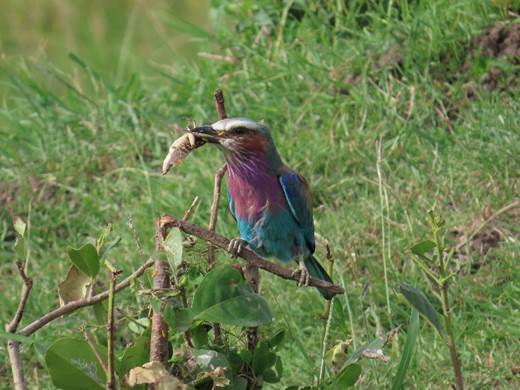
We saw Lilac-breasted Rollers a lot in the Masai Mara and they were always a delight.  Apart from being stunning to look at, they made viewing easy by perching near the tracks and being obligingly photogenic.  One happily demonstrated its hunting capability by catching a large grasshopper and swallowing it in front of us.

And that completes the Kenya bird story and indeed the Kenya story itself.  I haven’t mentioned a whole raft of other birds, too many to mention, and nearly all with no direct comparison to birds in Europe. The colours, the variety, the sheer numbers, and the ease of seeing them in totally natural surroundings in Africa makes this hobby such a different, special and rich experience.

We saw 118 species in 4 days on safari in the Masai Mara and 11 more at the beach hotel near Mombasa (mainly shore birds like the little sanderlings that run to and fro at the water’s edge), and I still have a few unidentified bird photos.  There is no doubt both Sabine and I have got the African birding bug that I know my friend Gordon has as well (he’s chasing his 500th species).  We added a lot of new species on our next trip to Southern Africa (Cape Town and the Garden Route) at the start of 2025 and while I want to say I’ll do another post or two about that trip, given that this one is a year late, I’d better not make promises I won’t keep …… but hopefully watch this space 🙂