I’ve just watched two later Clint Eastwood movies. Gran Torino is the movie Sabine’s nephew will be examined on in his A Level equivalent English exam in Germany. It was released in 2008 and is a great movie. It is spectacularly politically incorrect. It covers a lot of aspects of American life and Clint pays his character, a Korean War veteran and retired Detroit Ford Plant xenophobe, a man of his era, to perfection at least in my eyes. I just creased up at one one part and I’m still laughing out loud at its memory as I type this. Could he get away with it today – sadly probably not.
You need to know that Clint Eastwood has been part of my life since he played Rowdy Yates in a weekly black and white cowboy programme called Rawhide https://en.wikipedia.org/wiki/Rawhide_(TV_series); it shows my age as its first series came out in 1959. So perhaps unsurprisingly, at the end of Gran Torino, I was looking at others of his movies on Amazon Prime and, in my excitement reminiscing about all the enjoyment I have had watching him on the big screen, I accidently rented “The Mule”.
I watched it tonight. It came out 10 years later in 2018, and is much less politically incorrect even though the character he plays is very similar except he looks older – 88 in fact when he made the movie. Again, it was a good story with a strong cast. At the end of the film the lyrics to the closing song made me suddenly sit up – they included the words to Gus’s mantra mentioned in other stories that I have taken to heart so much.
Google helped out – here’s an extract of an interview with the writer and singer, Toby Keith:
Keith, 62, remembered a conversation with Eastwood that gave him the idea to write “Don’t Let The Old Man In.” The country music icon said it happened during the time Eastwood was filming The Mule, a 2018 thriller that follows a ninety-year-old horticulturist and Korean War veteran (who) turns drug mule for a Mexican cartel. Keith’s song ultimately ended up in the film.
“It’s an interesting story, how this song came to be,” Keith said in a video on Instagram. “Clint Eastwood, when asked by me, what he was gonna do on his birthday, he said he was gonna go shoot a movie. He was 88 years old, and I said, ‘what do you do to keep yourself going?’ He said, ‘I try to get up and be productive, and don’t let the old man in.’ So, I wrote (the song, and) sent it to him. He put it in that movie, The Mule, and then it exploded on NBC when I sang it on the People’s Choice [Country] Awards when I was getting the Icon (Award).”
I wrote about buying a weathervane last summer in the story “Quoi ne marche pas en France en Août?” In case you were wondering what happened to it, I’ve provided a short update. I’ve also extracted the relevant part of the original story below the update in case you missed it – sorry it’s a bit long but it is an insight into how things are in France in August.
2nd March 2024
It was a lovely sunny day in Rhu on Saturday and not windy. I’d put off erecting the weathervane because I was worried about drilling a completely vertical hole in the top of the fence post, silly I know. As a result, it was at the back of my mind that it was a job I was avoiding until Sabine found it in the garage a couple of weeks ago and then there was no escape.
So pre-empting the question “When are you going to put the weathervane up” (although it would have been worth hearing the pronunciation struggle again, as explained below in the original story), I thought I’d better get on with it. I was breaking my own rule of not doing anything skilled after lunch but it was a beautiful afternoon here, the poached eggs on top of haggis, hash browns and a bun I’d just enjoyed at a local Helensburgh eatery needed some working off and I’m still repeating to myself Gus’s mantra “Don’t let the old man in”.
It was, of course, easy to put up. I drilled the hole by eye and slowly screwed the base in, using a spirit level to make sure it was vertical. I even managed to fit the top part with the rooster and arrow without dropping and losing the marble that was the key to the whole operation.
I didn’t have a way to align the base with the points of the compass, though. Unlike the picture in the original story, our base only has S – you can see in the photo below the sun for E and the moon for W, and N is a star, so, as if it mattered, I concentrated on finding South. I looked down Gareloch and over the Clyde in what I thought was the general direction, but a Eureka moment evaded me. Sabine had a compass app on her phone ….. that didn’t work; she downloaded another one that didn’t work either, so I put one on my phone and it was OK – phew.
It’s a little counterintuitively to me, but of course the arrow points towards where the wind is coming from, not where it’s blowing towards. But we’re really pleased with it …. et ça marche.
——————————————————————————————————————————-
The extract from the original story:
10 and 11 August 2023
“We’d seen an advertisement for weathervanes in the Saumur visitors’ guide when we first arrived at our chambre d’hôtes. We were intrigued and just wanted to see what the blacksmith had.
On Google Maps, the workshop looked easy to find, an unusual tourist place to visit and possibly relevant for the house in Scotland, and we liked the idea of supporting a local artisan, even if we only turn up, show an interest but don’t buy anything. Mmmm.
I need to get this out of the way early on and I won’t mention it again. The word “weathervane” is not that easy to say if you happen to be German. It has two parts, the first starting with a “w” and the second with a “v”. In English the letters have different sounds but the word is fairly simple to say. However, in German the two letters have the same sound (“v”) as there is no “w” sound. And then the “th” in the middle of the first part can be awkward too as there is no “th” sound in German either (it sounds like a “t”) but can come out as “zz” or even “f”.
So when you’re with a German who is fluent in English and who therefore understands to the need to not sound like a German when articulating the first part but in mid-word change to sounding like a German for the second part, you can get a variety of words articulated, sometimes in quick succession if the first attempt(s) didn’t quite get it right. Usually followed by a laugh.
For any reader who is sufficiently interested in other people’s languages, the French for weathervane is “la girouette” and in German it’s an almost direct correlation – “die Wetterfahne”, pronounced Vetterfarne. Neither word is important to this story.
There might be something else that needs explaining. I use the term “blacksmith” when possibly the correct term is “metal worker”, especially as no horses needing shoeing were in evidence. However, metalworker seems such a boring term for a skilled craftsman, an artisan, someone with so much creative flair, that I have reverted to using the old term to make it sound a little more inspiring. I hope you don’t mind. And, No, I’m not going to give you the translation for those words in French and German as well.
[I described the difficulties we had finding somewhere for lunch in the blacksmith’s village]. It was now after 2pm so we headed down the short sideroad to the blacksmith. We could see the gate to his place and some large sheds – looked quite an operation. The gate was positioned across the entrance in a blocking unwelcoming sort of way and when we got to it there were no cars in the forecourt beyond.
By then, we knew to look out for a sign and there it was – opening hours 08.00 to 13.30 Monday to Friday. Double merdre. We’d missed them by about 30 minutes. But then, we thought: What – they only work five and a half hours a day? Even in France. No, that can’t be right. They must be about to re-open, say at 2.30 or 3pm. But re-reading the sign twice and looking helplessly over the gate at the empty facility didn’t change anything. It was well and truly fermé. It gave out that desolate feeling that told you it would stay like that for almost another 18 hours. Four out of four. 100%.
And you feel so stupid, standing there in the heat of the day, mouth opening and closing but no sound coming out that could possibly express your frustration, looking at the buildings and forecourt devoid of life, the closed gate saying to you that its sole purpose in life is to stop you from doing something you shouldn’t, like walking into an area that is closed until 8am the next morning.
Our initial reaction to this experience is unprintable. Our incredulity at a business that advertises in a significant local tourist publication but omits a really important piece of information (come early to avoid disappointment), a bar where the owners couldn’t be bothered to take the sign off the road before closing the establishment for good, a shop advertising sandwiches that’s closed for 3 hours at lunchtime, and a tearoom only open 3 days a week in the middle of the summer.
And we’d checked their very good website and I didn’t remember seeing those limited hours. I checked it again when I started writing this article and sure enough the hours are what you’d expect, open in the morning, an hour or so for lunch and open in the afternoon. I must have stopped looking when I saw that. But only if you scroll down, out of sight of the normal hours, do you see they tell you that “exceptionellement”, it was only open those more limited hours that particular week – and closed completely for the two weeks after. In retrospect, how lucky were we to catch them on their last day!
How disconsolate were we? A lot was the answer and some ripe language was heard on the way back to Saumur. But not disconsolate enough, obviously, because we did decide to go back the next day. Our interest in weathervanes had been sufficiently piqued to return the next morning, Friday, when perhaps, without pushing our luck too much, both the blacksmith and the tearoom might welcome us.
And we were right on one count, the blacksmith. He was open – hooray! We parked in the carpark off the street outside and walked across the road, through the forecourt and into a large shed that was connected to another one behind. Off the forecourt there were other large sheds that was occupied by at least one other business that also managed to work an onerous 5 hours a day. Metal worked shapes of various dimensions greeted us – round window frames that would sit out on the sloping roof of old buildings, the large pointed pinnacle of an old tower, huge decorative fleurs des Lis. Clearly, if you had a run-down chateau and plenty of money, this was the place to come to get help with the restoration.
In the centre of the forecourt was a metal pole with lots of metal arms and on the arms were a variety of weathervanes. And the variety was enormous. We stopped to admire them and think through the huge number of options. First, did we want one to mount on the chimney or a post in the garden? Then, which of the themes would we be interested in – animals, water, scenes of life, nature, occupations, one for mechanics (with cars), or fantasy? Did we want to design one ourselves and let them make it (obviously a non-starter for us)? How did you want the points of the compass below the image to be displayed? Mon Dieu.
And the choice within both the themes and the compass points was huge, even with the ready-made weathervanes on display. I suppose the first question really was did we want one at all? Of course we did. We’d have been kidding ourselves if we’d gone this far and not bought one. And for Rhu, it would be perfect fixed to the top of a fence post in sight of the kitchen doors.
The blacksmith was in his workshop and asked in French if he could help us. Sabine to the rescue. Yes, it was fine if we wanted to just look around. In the end the choice was easy. We settled on the Gallic Rooster that we had taken a shine to right at the start, with a star, the moon and the sun and just one compass point (S), with all the figurines made in copper. It came in two pieces, the rooster and arrow fitting over the pole that the compass points were attached to with the secret ingredient being a small marble-like ball that sat on top of the pole to allow the rooster to turn in the wind. Ingenious.
All this was explained in French by the blacksmith, the Atelier de la Girouetterie as the business was called: https://www.girouette.com. Thank you, my lovely German girlfriend, for being able to handle that side of things. The atelier called his young assistant, possibly his daughter, who had been working in the rear shed, to come and deal with the finance side of things. He set about wrapping the two parts, an awkward job given the spikey components that mercifully appeared he’d done before. It was now about 12.50pm.
The cost was a not inconsiderable €490, a lot more than I’d thought it would be (if I’d thought about it much at all) but hey-ho, it was a piece of true craftsmanship, came with our story in getting it, we really loved it and we’d already erected it in our minds in the garden in Rhu. I produced my Lloyds euro account debit card and we thought we were back in Austria – je suis desolé, pas de cartes. Only cheques or cash. Quoi? You’ve got to be joking!
I knew we had less than €150 in cash between us. Once they had determined that payment by cheque was not going to happen, the assistant told us there was un bankomat at the Carrefour in Distré, four kilometres away back towards Saumur, where we could get cash out. I remembered seeing the sign for Distré when we had left empty-handed the day before and had driven back to Saumur that way. Great. Stressful? You bet!
Thank heavens for Google Maps which located the supermarket and guided us there. At least it was off the main road and not in the middle of the town. It involved going to the second roundabout, coming back in the direction we’d come, and immediately taking a slip road into the shopping mall carpark. You didn’t want to miss that slip road because it was off a dual carriageway and we’d have to drive back to the end of it, turn around at the first roundabout and come all the way back.
So far so good. But where to park, where was the cash machine? By that time, we’d agreed that if they wanted the sale, they’d stay around if this took us longer than 30 minutes. But that attitude didn’t help an awful lot. We still felt very stressed. I left Sabine in the car and ran to the shopping mall main entrance.
I found the cash machine easily enough, correctly reckoning that it would be just inside the main entrance which was also the entrance to the Carrefour. Phew. I chose €400 and the machine refused the transaction. I was sure I had enough cash in the account. I tried €300 and it worked. Phew. Out came 30 €10 notes. I wasn’t going to count them and we were still about €50 short. I put the card in again, this time opting for the lowest amount on the list, an interestingly high €120. Out came 12 €10 notes. Phew.
I couldn’t stuff them all in my wallet. I felt like someone who’d won the jackpot in Vegas on a slot machine with a ton of quarters to have to scoop up. So I went back to the car trying not to look like someone with 42 €10 notes in my pockets. I gave them to Sabine along with my other cash and she counted out the required amount, including the €50 note that she’d had trouble using the day before.
We still had time. We could feel the stress completely dissipating as we drove back. The blacksmith and his assistant welcomed us with open arms and the exchange took place. Smiles all round. They waved us goodbye – as we now know, they were about to start their two week holiday, so no wonder they were happy, especially with an extra and unexpected nearly €500 in cash in their pockets.”
I really don’t like spring skiing, especially in February. Snow like concrete first thing, about an hour, maybe two, late morning of nice conditions, then snow like porridge (really hard work skiing on or through it) for the rest of the day and too warm. Don’t get me wrong, we had a lovely holiday: Sabine relaxed and forgot about work, we were able to do things other than ski (because of the weather) and we came away uninjured but having skied as much as the conditions allowed. We were very happy.
Travel-wise (a popular theme of mine from the other stories so far), everything went well till we landed in Salzburg and had to get from Salzburg Airport to the hotel. The taxi people had told us that there would be a major traffic jam caused by roadworks restricting a long autobahn tunnel to one lane and the taxi was going to cost a fortune. Saturday being change-over day at the ski resorts made the traffic several times worse than usual.
They recommended we catch a bus at the airport that could jump the traffic queue and drop us at a town called Eben, the other side of the tunnel, and they would pick us up there. The bus was scheduled at 2pm or 4 pm; we’d be just too late for the former (the schedule was too tight and the plane was half an hour late anyway) and so we chose to wait and catch the 4pm one.
There was an alternative – to go into Salzburg to catch a train at 3.08pm to Bishofshofen where they could also pick us up but with two hand-luggage bags, two checked-in bags including a large and surprisingly heavy suitcase and two pairs of skis, it seemed too much effort when the bus would be outside. Except it never came, or at least never drove past us on the one-way system because we were actually waiting for it where we’d been told but at the old bus stop, not the new one. And the next one wasn’t till 7pm (if it came).
So at 4.20pm, after a long conversation with the bus people who couldn’t trace the bus and in consultation with the taxi firm, we decided to get a cab to Salzburg Station, catch a later train, change at Bishofshofen to one going to Schladming, and get picked up there. Which we did, it all went smoothly, an absolutely lovely lady sitting behind us on the first part of the journey carrying our skis when we changed trains, it still worked out cheaper than the taxi all the way and, most importantly, we arrived at the hotel in time for the 5 course dinner. But that was the first of the several examples of “You just can’t win” – in this case our initial choice of bus over train making the journey longer and far more stressful than it should have been.
Another good example was the ski pass. Sabine’s nephew called her a fair weather skier but she was mainly accommodating me because I definitely am one and make no apology. It’s safer and far more enjoyable. So the forecast for the week predicted Monday, Tuesday and Friday to be days I’d rather not ski – overcast (which means you can’t make out the surface of the piste), some rain, windy and lots of rain and snow on the Friday.
There was virtually no discount for the per diem cost of the ski pass until you bought six consecutive days. If you didn’t ski because of the weather, you effectively lost the money for that day. So for the first time ever, I didn’t buy a ski pass for seven days, but got them daily or for two days at a time. But Monday hadn’t lived up to forecast expectations and by Tuesday morning it definitely didn’t look as bad as the forecast. What to do? Because of the forecast, we’d come up with another outing that day which really appealed and it was definitely cloudy at the top of the mountain but if we’d got a ski pass, we’d definitely have gone skiing. You just can’t win.
I have to address the ski conditions and I think this photo taken from the valley during an apres-ski afternoon walk mid-week tells it all, and I’m not referring to Sabine’s love of woolly animals:
Then on Saturday, after the big snowfall on Friday, it looked like this:
So Saturday was wonderful with the fresh snow, but the slopes were crowded with locals and the afternoon was still too warm for good skiing. On every one of the five ski days, we started early and finished at around 1pm. However, on the Sunday our flight back wasn’t till 4.25pm and we could and did book a taxi all the way to the airport. That gave us nearly 4 hours skiing on Sunday morning and it was fantastic – perfect snow conditions, well-groomed pistes, blue skies and sunshine, around 0C, and not a lot of people on the slopes. It was the best skiing in all the days with Gus or Sabine this year. The people arriving as we left, mainly Germans, would have much better snow. You just can’t win.
Back to the non-skiing days. Our first day off on the Monday meant that we could visit my cousin Mike, in hospital about an hour away by train, after he’d suffered a heart attack on the slopes near where we were staying. A doctor in his ski party, a ski hut right there, another doctor in the ski hut, the prompt response of the emergency services and a nearby heart hospital meant that he received the treatment he needed. It was very nice for us to be able to go and see him. He’s back in his home now but under the supervisory care of the cardiac unit of East Surrey Hospital, Redhill.
On Tuesday, we agonised about not going skiing but stuck to Plan A. We caught a bus from the base station of the Hauser-Kaibling gondola to a little village called Rössing where Lodenwalker (pronounced Loadenvulka), a business established in 1434, still manufactures felt from the wool of mainly the local mountain sheep, which it uses to make its own lines of clothing. https://www.lodenwalker.com/en
One of these lines, the Schladminger Loden (a really heavy felt coat, warm and water-proof), has been made even more famous by the celebrities who have purchased it. It justifies a story in its own right, so I’ll simply attach a photo of Arnie sporting his Schladminger alongside one of Sabine modelling the Lodenwalker waistcoat, the latest addition to her wardrobe.
Sabine Arnie
And Lodenwalker is a good example of something we observed throughout the various valleys we travelled through. There is a lot of small scale industry of all shapes and sizes all over the region. In Haus we found a manufacturer of buttons for traditional Austrian dress (dirndl and lederhosen) and an importer/exporter of classy leather goods. In other places, there were lumber mills, small chemical plants, furniture makers, and a technology automation specialist, to mention just those I remember. And of course there was the fantastic hospital in Schwarzach im Pongau that looked after cousin Mike.
I can give you another example of the unintended consequence of having to make a decision. I’m retired, so I can go skiing anytime. However, my better half is gainfully employed and so we needed a week that would be best for her work and also not give us the horrendous lift queues that we suffered last year – Fasching Week, a start of lent carnival holiday week in most of Germany and Austria. This year it was the first week of February (Easter is early this year) and English half term was the week after. So we went for the third week of February. Except that it turns out that is the holiday week for the local province, Steiermark (Styria). It is also Crocus Week for the Dutch, so we had the queues again and at times overly crowded slopes on top of challenging snow conditions. You just can’t win.
I wish I had been able to take a photo of one particular family. Does anyone remember the family in film National Lampoon’s European Vacation, the Griswolds: Mum, Dad and two teenage kids. In Paris, Dad (Chevvy Chase) got them all to wear ill-conceived French berets with their first names on them, to blend in with the locals and not look like tourists, says Dad. Of course, they looked like dorks. Well, there was a family of five, Mum, Dad and three kids aged about ten to fourteen all wearing unmistakable exactly matching ski outfits (vivid green and yellow). We saw them on two different days. In fairness they weren’t bad skiers but they looked absolutely ridiculous all skiing together in these co-ordinated outfits. I can’t understand how the kids went along with it – no ski holiday otherwise? Weird parents, any way you look at it.
In addition to arriving by train and visiting Mike, we had a another train journey to Salzburg on Friday in the pouring rain and snow on the way back, where we had lunch in a delightful authentic restaurant that served Salzburger Nockeln, a soufflé served with raspberry jam (yum yum).
In the train to Salzburg, an older man with a meowing cat in a travelling basket sat opposite Sabine, who naturally struck up a conversation with him, asking him if they had a long journey ahead of them. The cat replied by meowing again and he said yes, Vienna (300km to the east) – the cat had belonged to his ex-wife who had just died the previous week; he couldn’t keep it, so he was taking it to a new home with a former student of his there rather than put it in the local animal shelter. Sad but lovely at the same time.
We caught 9 trains on this trip. It would have been 10 but we caught a direct train (Swiss – Zurich to Graz) from Schwarzach to Schladming after seeing Mike – very exciting, but sadly ours didn’t have the panorama observation coach that we saw go past a day or so later during our apres-ski valley walk. They were all high quality, especially the local shuttle between Bishofshofen and Schladming – clean, on time, good station signage, the local shuttle not at all crowded, convenient timetables, good connection times and not expensive. They linked in with the ski bus timetables in Schladming too that we took from and to the hotel in Haus.
All in all, a great holiday but like the Skiing with Gus story, we had to make the best of less skiing than we’d wanted. Global warming and its effect on the skiing industry and the regions dependent on it as well as the possible limited horizon to the enjoyment skiing gives to so many people were glaringly obvious, but I can remember other years when the snow has been bad and things subsequently improved. Who knows.
Sorry I had to interrupt the Kenya flow with the skiing story. We’re now back on track with more birds – I’m sure my kids will be delighted.
As a recap, in Kenya – Part 4a I introduced the Crested Lark, Southern Ground-Hornbill, Grey Crowned Crane and some Kingfishers. This selection was a bit random. so to get this second part on Kenya birds going, I made a list of the birds we saw that I thought would be interesting to write about. As in Part 4a, they first had to be not seen in the UK and I had to have something to say about them from our game drives. I found the list got longer and longer, so I’ve had to be quite selective.
The Birds of East Africa and Wikipedia have been my primary sources of information.
Little Bee-eater
This bird was so easy to miss. Why? The adjective in the name is a bit of a give-away – it’s about the same length as a house sparrow (15cm head to tail) but not as chunky, and they sit very still on a low perch watching for their prey (insects, especially bees, wasps and hornets). Cleverly, they know to remove the prey’s stinger before eating it, which they do by hitting it repeatedly on a rock or other hard surface.
Europe has one species, a larger version which I think is even prettier but which I’ve only seen once, in Brittany. My East Africa bird book boasts 20 bee-eater species including the Little and the European. We only saw this one – or rather Simon spotted it or else we would have completely missed it. It’s widespread and plentiful – I saw it in Kruger too.
Pin-tailed Whydah
And right after the bee-eater, we saw this small bird with a long tail. We had an interesting time interpreting what Simon was telling us was its name but eventually Sabine got there by looking through the book until she found it (right at the back, of course).
Only when I came to write about it did I realise it’s approach to breeding is like that of the UK’s Common Cuckoo. It lays 2-4 eggs in the nests of a number of waxbill species and lets the host parents rear its young.
Common Waxbill
This has to be the bird world version of both wetnurse and childcare with no biological parental responsibility or involvement. Unlike the Cuckoo though, the host’s eggs are not destroyed by the foreign hatchlings and the host raises both their own and the Whydah’s young together.
Excluding the long tail, the Pin-tailed Whydah is even smaller than the Little Bee-eater. However, it too is widespread and common across a variety of habitats.
Common Ostrich
From one extreme to the other. Simon stopped the Landcruiser to observe them in the middle distance and predicted what was about to happen, even though the male was a long way away from the female. We witnessed the courtship display by the male Ostrich to the female. He headed straight for her, going past another female on the way, curved his neck back so his beak was pointing straight up to the sky, spread his wings out and strutted towards her.
She moved away from him in a hurry but then stopped. He continued his display, still advancing towards her. He had obviously impressed her because after she stopped and he reached her, he proceeded to have his wicked way with her. And when they separated, he simply walked away from her and disappeared over a ridge without so much as a backward glance. Nothing tender and loving about that relationship.
We saw quite a few Ostriches, as opposed to none in either of the Kruger visits, probably because Kruger was all scrubland; they prefer the open grassland habitat of the Masai Mara and Serengeti, which allows them some protection in using their top running speed of 70 km/h, as flight clearly is not an option. And at 2.2m in height, they are the largest bird, the fastest two legged animal on land and they lay the largest eggs of any living land animal.
They are largely herbivorous but will eat insects and other small animals. It takes 3 – 4 years for them to reach maturity and the males may take another 3 years before they mate, which is a very long time in the bird world, but then they are very large birds. Their life span in the wild can be up to 40 years.
Secretary Bird
While still on the subject of very large African birds, this is undoubtedly one of the weirdest looking birds I’ve ever seen. Adults grow to 1.3m tall and they prefer open grasslands with relatively low foliage. Their status is Endangered due to a loss of habitat.
We saw three of them – one on its own and then a pair of them on another game drive. Sadly each time we only spotted them close to the road which they then crossed in front of us and I couldn’t get a good photo, so the one above is from Wikipedia and the one below came from the San Diego Zoo website, where they have been bred in captivity.
From their beaks, you can tell they’re actually birds of prey but, even though they can fly, they find their prey mostly on foot. They feed on a wide variety of insects, reptiles, amphibians and small mammals. Extraordinary-looking birds.
Hamerkop
The Hamerkop gives the Secretary Bird a run for its money in the weird-looking department. It gets its name for the Afrikaans for “hammerhead” and it’s not hard to see why. In taxonomy, it is the only species in its Family, so it is unusual in more ways than one.
We saw them every day, often in marshland close to the road or track and they showed no signs of being disturbed by us. They are extremely versatile in their diet, preferring amphibians and fish but by no means limited to them. They find their prey by walking through water, probing in the mud and in flight. This wide dietary range makes them a very successful species and are in no way threatened.
Rattling Cisticola
We heard this bird before we saw it. It was like a rasping, rattling noise, very distinctive preceded by a series of churrs. Now I have to admit that in the book a lot of Cisticolas look alike, some very alike. We have that look-alike problem in a few UK birds – marsh and willow tits, willow warblers and chiffchaffs come to mind. A distinctive call is the best way of identifying which species it is. Simon could tell it was a Cisticola but wasn’t sure which one.
Sabine had his bird book and searched for a bird that would have that call. She found it among the 41 species of Cisticolas. It fitted the sound we’d heard perfectly. We drove on about another 200 metres, heard it again, stopped, and then saw it perched out in the open making that same rattling noise. Eureka! What an onomatopoeic moment (sorry to appear a little highbrow but I couldn’t resist – when the name for something reflects the sound it makes).
They’re a little smaller than a house sparrow and very common in grassland and scrubland habitats, feeding on insects and their larvae.
Bateleur
This bird is a medium-sized eagle and therefore large by raptor standards (70cm in length and a wingspan of 180cm, typically about 50% larger than our Common Buzzard). We saw it on two or three occasions, one very close to us and we were able to watch it losing out to a slightly larger Tawny Eagle for a tree-top perch. I also saw it a few times in Kruger – the habitats of Kruger’s scrub and open woodland and grasslands with a few trees as found in Masai Mara are what they prefer.
However, they take 6 to 7 years to reach maturity, are easily scared off their nests by predators (mainly other raptors and humans) and have suffered from habitat loss, pesticides and persecution. Despite a varied diet that includes carrion, this has meant that its numbers have declined rapidly recently such that they are on the Endangered list and although widespread in sub-Saharan Africa, it is found mainly in protected areas.
The name is unusual. It has survived in the original French form that was given to it by a French naturalist and explorer, François Levaillant (1753-1824) and means “street performer” – not sure why he chose that name. Its Latin name means “marvellous face without tail”, the lack of a tail being quite evident in the photos (the flight photo is from Wikipedia).
There are more birds I’d like to show you, so I’ll be writing a Kenya – Part 4c.
Not my original work, but an article I thought was so interesting that I wanted to put on record here.
Historian Doug Ford explains why Islanders, and UK residents, lost 11 days in the mid-1700s
IN The Hitchhiker’s Guide to the Galaxy, Douglas Adams famously wrote: “Time is an Illusion. Lunchtime doubly so.”
Philosophers can go on forever about objective reality versus subjective constructs and the arbitrary nature of perception, but, at its core, the concept of time is a human invention.
We use it as a means to organise and structure our lives, to measure the passing of moments, to order the past and to plan for the future and so it helps immensely if we are all on the same page.
In order to understand how we measure time today, it is necessary to go back just over 2,000 years to a period when the Romans were expanding their territory beyond the Mediterranean.
The Roman calendar at this point was a rather strange affair: a calendar year lasted 355 days, which meant that in order to keep the calendar in sync with the seasons an extra month was usually – but not always – added every two or three years.
In order to apply a bit more discipline to the calendar Julius Caesar introduced the Egyptian solar calendar to Rome in 46BCE. This new setup was named after him and became known as the Julian calendar. It was based on the calculation that the earth took 365 and ¼ days to travel around the sun. The year was divided into 12 months made up of 30 or 31 days, except for February, which usually contained 28 days.
Every fourth year – the “leap year” – an extra day is added to gather up the three previous quarter days. These leap years are also called intercalary or bissextile years (but not by many) and they help keep the calendar year synchronised with the astronomical or seasonal year.
Sadly, the Egyptians’ calculations were not entirely accurate. They were out by 11 minutes and 14 seconds per year and so, over the centuries, the Julian calendar gradually drifted away from measurable astronomical events such as the winter solstice and the spring equinox. By the 16th century it was determined that the calendar was ten days out, so, in order to correct this, in 1582 Pope Gregory XIII decreed that the day after 4 October should be 15 October. This new calendar would be named after him.
Unfortunately, the Reformation had divided Europe and so the new Gregorian calendar was adopted only by the Catholic countries such as Italy, France, Spain, Portugal and Flanders. Protestant countries such as England, Scotland, the Netherlands, Denmark and Sweden carried on using the Julian calendar.
Around 1700 the continental Protestant countries adopted the new calendar, leaving Britain and her colonies out of sync with most of their trading partners/rivals and so, in 1751, Parliament decided to align with the rest of Europe and decreed that Wednesday 2 September would be followed by Thursday, 14 September. There are stories of people taking to the streets of the larger towns demanding, “Give us back our 11 days!” But there is little evidence to back them up.
On 28 December 1751, the Royal Court registered the Act of Parliament which would see Jersey begin to follow the new Gregorian-style calendar, thus depriving Islanders of their 11 days as well.
Bizarrely, the island community of Foula, in Shetland, ignored the message and, while they don’t live by the Julian calendar (which is now another day out of sync) on a daily basis, they still celebrate Christmas and New Year’s Day 12 days after the rest of the UK.
The UK was by no means the last to change; the Eastern Orthodox and Greek Orthodox countries only adopted the Gregorian calendar between 1915 and 1923 and even then their churches continued to celebrate their important feast days according to the Julian system.
Another change brought in by the same act was that the new year would start on 1 January 1752 instead of the old practice which saw the new year begin on Lady Day – 25 March. This brought the entire United Kingdom into line for the first time in over 150 years, as Scotland had been celebrating 1 January as the start of the new year since 1600.
The reason that the year had traditionally started on 25 March, popularly known as Lady Day as it was the celebration of the Feast of the Annunciation, was because it was the first of the “Quarter Days”. In the pre-industrial era most countries had an agricultural economy and following the dramatic fall in population in the middle of the 14th century due the Black Death, most labourers were hired on an annual contract.
As the majority of people were illiterate there needed to be a simple system so that everyone knew when contracts would begin and end. Because the Church played such a central part of most peoples’ lives, important fixed religious feast days approximately three months apart were chosen, as they could be easily remembered.
By splitting the year in four they became known as “Quarter Days” – the others being 24 June (the Feast of St John the Baptist), 29 September (Michaelmas or the Feast of St Michael and all Angels) and 25 December (Christmas Day).
Quarter Days became the four dates in each year on which servants were hired and rents were due. In Jersey, the Quarter Days were formalised on 25 April 1753 and confirmed in the Code of Laws of 1771 for letting houses. Rents for farms and lands were usually due on Christmas Day and money collected for the poor in the parish churches was distributed by the rector, Constable and other parish officials every Quarter Day as well.
All this may appear irrelevant to modern-day living, but it does explain why in England the financial year begins on 6 April.
While it may have been fine in 1752 for the working man to lose their 11 days it was definitely not the case for the country’s finances, and so the start of the tax year was pushed back 11 days to 5 April and then by another day in 1800, meaning it was moved to 6 April, where it has remained ever since.
Leap years
As a general rule of thumb, a year is a leap year if it can be divide by four, but, like all good rules, there has to be an exception and this applies to centurial years that have to be divisible by 400.Therefore, 1700, 1800 and 1900 were not leap years, but 2000 was.
Strangely, even though 29 February only comes around every four years, it is still a more common birthday than Christmas Day.
What could possibly go wrong? Gus travelling from Jersey to Heathrow with BA, me flying from Glasgow to Heathrow at almost the same time, linking up in T5 and flying on together to Innsbruck also with BA.
Well, for one thing, weather in either Jersey or Glasgow or both and/or weather in Heathrow. Then there could be technical problems with one or other of the planes which probably had a flight before our individual flights to Heathrow. You also have to factor in the possibility of delays or cancellations due to staff shortage and baggage handler problems, and weather or air traffic control restrictions anywhere else in the UK or Europe that morning that could affect our fights.
Would one of us making it to Heathrow and one of us not? Would both sets of bags and skis make the connection at Heathrow – we’d only find out at Innsbruck Airport? Would the only Innsbruck flight from Heathrow that day be cancelled so that we’d have to go to Gatwick – if there were seats on that later flight – or Zurich like last time we did the trip 2 years ago, when we arrived in Lech after midnight? Would the taxi at Innsbruck Airport be there? Would the mountain road from St Anton to Lech be open if there was a heavy snowfall that day?
Gus had booked to come from Cape Town to Jersey, also with BA , only 2 days earlier – another high risk element of our undertaking. Now I go through all this, recounting all the risks of everyday travelling that increased exponentially in the aftermath of lockdown, we must have been crazy to even think we could meet up at Heathrow and go skiing together.
But in fact none of these problems occurred. Not one. It all went like clockwork. We arrived at the hotel in Lech in good time to get sorted out well before (the 5 course) dinner that included Wiener Schnitzel. And I won’t hear a word said against BA; I’m one of their biggest fans, as readers of the first Kenya safari story will know.
We had 11 skiing days in between the 2 days travelling there and back. Or rather, 11 days that potentially we could have skied as long as the weather behaved (which it didn’t). To be able to ski at all, the first thing you have to do on Day 1 after you leave the hotel and ski down a short way to the village is buy your lift pass.
Now both of us are over 65; so as long as you’ve remembered to bring ID that shows your birthday, you can get a senile git discount. The charming lady at the ticket office, speaking impeccable English in return to my stumbling German, advised that we should buy a season pass as it was cheaper for periods of more than 6 days.
Then it dawned on me. “Oh”, I said to Gus as he was buying his pass, “I’m coming back here in March, so can I use the pass then too?”, to which, having overhead my musings while still dealing with Gus, the lady replied with a smile: “Absolutely you can”. An unexpected bonus.
I’m going to spare you a day by day turn by turn description of the vacation, but cover things in general and some of the highlights.
Lech
We had lots of sunshine too, great skiing and overall a great time in Lech –the Austrians do the whole skiing thing so much better than anyone else, in my opinion.
Warth
We found the combination of the weather and the snow conditions, some of which were challenging by our standards. Gus and I are good enough skiers if the conditions are good, but we are a bit choosy as to what constitutes “good”. We like to look as if we know what we’re doing, and it’s all too easy to loose what elegance we have on a variety of snow terrains. For example:
When the piste suffers from flat light due to low cloud such that you can’t see the terrain, that isn’t good because you are effectively skiing blind.
Ice, now often referred to as hard packed snow, also doesn’t constitute good in our books.
Neither does snowing or raining – wet, can’t see the piste because of the low cloud cover gives you flat light, and you need wipers for your goggles.
Lech Dorf im Schnee
Gus in particular doesn’t like strong arctic wind conditions at the top of the mountains. At 60 kph, the resort kept the chairs to the higher slopes running, but at 90 kph they didn’t and more than half the slopes were shut, which then led to …..
Crowded slopes, which doesn’t constitute good either because it’s best to avoid bumping into other people and you have to be so aware of the myriad possibilities of what other skiers might do.
We don’t like warm weather either, because it makes the snow softer and heavier, like porridge as I call it – it takes more energy to turn and is often more mogully (moguls are large bumps of snow that you have to ski round or over and which can easily thropw your balance off).
Small crusty lumps on top of a hard-packed piste can be simply uncomfortable to ski on.
And really cold weather, say -10C or below, even with the sun shining, isn’t what we want either, because at any kind of speed you get the wind chill effect.
Brrrrr
We encountered all these conditions either singly or in combination over the 11 days. We completely sat out two days, sadly one being Gus’s birthday (mainly very poor visibility) and the other being our last day (snowing and raining). On three other days, we only skied for half a day. Which is why we didn’t do as much skiing as usual.
Sabine’s brother said we went during the worst two weeks of the season weatherwise (probably almost as difficult for a German speaker to say in English as “weathervane” – for those who read an early story “Quoi ne march pas”).
But our limits on skiing in these conditions had a foundation in common sense. We were there for long enough that we didn’t need to be a danger to ourselves. Our game plan certainly was not to wind up like one of the men in a group of Germans at the hotel, who on his first day of skiing returned on crutches with his knee swollen and in a serious brace.
It’s important that you can ski in all conditions because you never know when things might change on the mountain. Neither of us liked the ice. It was intermittent, as in you are skiing along quite happily, then suddenly you hear this scraping sound and your skis begin to slide away from you downhill, which you have to immediately correct by not edging but gliding until you come to better snow where you can turn. It can happen suddenly and, in poor light, without warning.
I only fell once, prompted by my inability to cope with a sudden patch of ice near the edge of the piste on a red run, a gentle fall but one that made one of my skis come off. Fortunately it was near the end of the run because the brakes didn’t release and the ski kept going downhill. The ski even made the left turn towards the chairlift at the bottom, all on its own. It was lucky that no-one was downhill of me at the time as needless to say this state of affairs is very undesirable – i.e. potentially extremely dangerous. The next skier down thoughtfully picked it up and put out of harm’s way. And I had to walk down the edge of the piste carrying one ski to get it.
I was particularly vexed because I’d just had the skis and the bindings serviced. This in part was because the same thing had happened when Sabine and I were skiing with her brother and sister-in-law about two weeks before, but someone was nearby to stop the skis going down the piste. I told them of the problem with the bindings and I was at the shop when they checked and adjusted them, so I know they did look at them. I took the skis back the next morning and they rechecked and adjusted them again, without charge. Fortunately or not, another opportunity to test the bindings didn’t occur as I stayed upright for the rest of the holiday.
The last two paragraphs don’t do justice to how well the skis performed after they had been serviced. The service was clearly overdue, as the grunt from the lovely guy at the ski shop indicated when he saw them. Gus had his done too. With all the ice on the piste, it gave us a lot more confidence that we would cope ok. The hotel agreement with the ski shop meant that they delivered them back not just to the hotel but to our assigned ski lockers before skiing the next morning.
And I think this is the place where I mention the comment by the ski shop guy. We had to fill in a form saying how tall we were, how much we weighed, what our skiing level was and how old we were. When he saw our ages, he beamed and said it was extraordinary that we were still skiing. Gus had a great response “It’s important not to let the old man in”. It has echoed in my head ever since.
Lech had more English and English speakers there than in previous holidays – a lot more. That included Australians, some with their children (summer holidays in the Southern Hemisphere), who we’d never encountered before, and more Americans. That included our hotel. Among the guests were a delightful English couple, Ian and Elaine from St Albans, whose company we enjoyed in the evenings.
For the first time since we started staying at the hotel in 2016, Gus and I were entertained for dinner by the hotel proprietors, a lovely family of three adult children in their mid to late 20s, Matthias, Agnes and Johanes, and Veronica their aunt. Matthias is studying law at Innsbruck Uni, but the other 3 run the hotel, which is only open for the ski season. Another guest who lived in Sydney, Helen, was also invited and our youthful hosts loved the opportunity to practice their English till well past our normal bedtime. A lovely evening.
In previous years, Gus and I skied most of the connected resorts – Lech, Warth, Zurs, St Anton, and Zug. We never went to Stuben but you can. We’d even skied the route called Der Weisse Ring which takes you from Lech to Zurs to Zug (via a reasonably difficult itinerary) and back to Lech, but this year we stayed mainly in Lech with a couple of trips over to Warth, where we found the slopes less enjoyable – usually it’s the reverse.
Birthday Boy
On the two days of not skiing at all and one of the half days, we made our way to Zug, about 3km away. The first time, on Gus’s birthday, we walked through enchanting woods near the hotel with fresh snow clinging to the branches and the air very still, as it can get during and just after a snowfall. We arrived at Der Rote Wand (The Red Wall) hotel and restaurant, looking forward to our mid-morning coffee.
We went into the reception and turned right to the restaurant where we could see people sitting. A receptionist came rushing up behind us and told us in no uncertain terms to be point of rudeness: “Es ist geschlossen. Wir sind nicht öffnen bis Mittag” – It‘s closed. We‘re not open till midday.
To say we were stunned is putting it mildly, first by her attitude, completely the opposite to the welcome and service we’d experienced everywhere else in Lech and on the mountain, and second by our disappointment – no coffee. We turned around, walked a different way to Lech, had coffee there and never went back to Rote Wand. I doubt we ever will. The subsequent two visits to Zug for lunch were very successful at another hostelry, das Alphorn.
We came away at the end of the holiday feeling happy with ourselves. We’d skied well enough in difficult conditions (for us at least) and still enjoyed it. No, we hadn’t skied all day every day, but given the conditions, we had nothing to chastise ourselves about. And didn’t hurt ourselves or anyone else. Alles gut!
I read an interview in The Times recently. Annoyingly I can’t remember who it was (senility setting in) but he was asked who he would like to apologise to. His answer was his children – he believed that parents do so much damage to their children and he just wanted to say sorry to his for whatever harm he’d caused them. I now appreciate how right he was.
Just before Sabine and I left on this vacation, I came to realise that you can hurt your children even when you think you’re actually doing the opposite and giving them the treat of a lifetime. What you inflict on them can come back to haunt you for the rest of your life, certainly nearly fifteen years on.
I can see now that taking them on that Kruger safari in 2009 was a big ordeal for them. It also seems to have given them elephantine memories. I say that because they are able to relive their trauma in every detail as if it were only yesterday, recalling it so clearly and passionately in their warning to the next unsuspecting person with whom I’m going on safari, Sabine.
“Oh no, don’t let Dad tell the guide he’s interested in birds; if you do, that’s all you’ll see the whole time you’re out on the game drives. And he tipped the bird-mad guide more than he gave the really good one who got us a lion kill – what does that tell you?” And this cautionary tale was told by them both independently to Sabine. Without a doubt, they are scarred for life.
So when we were asked the usual opening question by the guide, this time by Simon: “What do you want to see”, I paused, thinking how best to answer without upsetting Sabine for the rest of the safari, but she stepped right in and said: “Elephants, and if there were some interesting birds, that would be great too”. Bless her, what a girl. And of course having Simon to ourselves meant we didn’t have to worry about the sensitivities and preferences of others in the jeep. We could stop and look at whatever we liked – perfect.
Masai Mara boasts nearly 500 bird species of all shapes and sizes, including 47 birds of prey. I would have been happy with 100 but we got the count up to 120 species, with quite a few more that we saw, perhaps fleetingly, going unrecorded because Simon and/or we were too busy looking at other animals to stop and investigate.
Identifying African birds is like starting bird-watching all over again. And 14 years on from the last time, I’d forgotten a lot about the birds we saw in South Africa. Most of the birds you never see in Europe, let alone in Britain, and in most cases there isn’t even an equivalent. There can often be multiple different species in a genus you’ve never heard of, most looking more or less alike.
Overall they are more colourful, more dramatic and more varied than the British birds that I and possibly you are familiar with. They’re also far harder to photograph than animals because they are generally much smaller, they don’t keep still and often they fly off just as the camera focusses.
Simon had a good working knowledge of the birds, but he wasn’t an expert, saying that he would take this opportunity to improve his knowledge. Ah, so not another bird-mad guide then – the kids would have been so relieved.
But he had a great bird book, well-thumbed, which he passed back to us when he was driving so we could look up any bird we saw that he couldn’t identify. Sabine was particularly good at that – must come with being a professional researcher. The book was Helm’s Guide to Birds of East Africa; it seemed quite complete and very informative with good pictures and details, but heavy for a field guide.
Before leaving the UK, I’d bought Collins Birds of Eastern Africa which paled by comparison. I bought it because it didn’t look like it weighed a lot – we were only allowed 15kg on the internal flights including hand luggage and I didn’t want a bird book that weighed a ton. The trouble was it was light in more ways than one. Simon’s book was so much better in every way. Between a rock and a hard place, as they say.
Bill Oddie is a keen and knowledgeable birdwatcher as well as a member of the Goodies; he has said you can never have too many bird books, a sentiment with which I heartily agree. So I bought the book that Simon had when we got back. It weighs 1.19kg, and it has been an invaluable aid to writing the Kenya stories about the birds we saw. It covers 1,448 species, about 70% of the birds found in all of Africa south of the Sahara Desert.
So where to start? I can’t cover all 120 species we saw, so I’ve made a selection of the birds that were especially memorable. Many of these are large, hence I have a photo to show you and I’ve copied photos where I don’t have one.
Crested Lark
I mention this bird first because it was the first bird we saw after climbing aboard the Landcruiser at the airstrip for the drive to the camp. They’re very similar to our skylark in size, with the crest and the colouring. They occur throughout Europe, Asia and the northern half of Africa. They’re non-migratory, so only rarely are they seen in the UK and then only as vagrants (i.e. they flew in by mistake).
We saw them a lot during our game drives, always on a vantage point like a post, a small shrub or a termite hill, and always making a racket. Like our skylark, they fly up vertically high into the sky (but unlike ours, don’t sing on the ascent), a behaviour that we sadly did not observe, perhaps because we weren’t in peak breeding season.
Southern Ground-Hornbill
This extraordinary bird constituted one of the most peculiar sightings we had and also one of the most memorable. They are very large birds, larger probably than a turkey. And with their red eye and throat wattles, curious eyelid that protrudes out over the eye, the large curved beak and short stout legs strutting about in a vast landscape, they are like no other bird that I can recall seeing.
We saw this pair looking for food about 100 metres apart on a large area of grassland. The male was the closest, so we stopped by him. When he caught a grasshopper, Simon told us he would now walk over to the female and give it to her …… which is exactly what happened. He came up to her, there was a little posturing and they performed what looked like a dance. It all seemed very chivalrous and loving.
The Safari Bookings website provides some good information about these birds:
“The southern ground hornbill (Bucorvus leadbeateri) has been classified as an endangered species within South Africa since 2014. The key factors contributing to this classification are loss or change of habitat, persecution, poisoning, and electrocution. Conservationists are taking steps to turn this around. Here are some interesting facts:
Ground hornbills call together before dawn in a chorus of repeated low grunting notes that sounds not unlike a distant lion. They amplify their calls by inflating the big, red, balloon-like wattle below their bill.
Small animals need to lie low when a party of ground hornbills is out foraging because these omnivores snap up anything – from insects and lizards to small birds, rodents, tortoises and snakes as big as puff adders.
Ground hornbills are very slow breeders and, as a result, a pair produces just one brood of two chicks every nine years, only one of which survives. Immature birds within the social group work as ‘helpers’, caring for the single chick.
Ground hornbills have lived up to 70 years in captivity. This makes them one of the world’s longest-lived birds, on par with albatrosses.
Since traditional African cultures saw ground hornbills as harbingers of rain, killing them was taboo. Thus, sadly, with the passing of such beliefs, these birds have become increasingly threatened.”
The point about how slow they are to breed is astonishing – to my mind, it’s even more surprising that they aren’t extinct by now.
Grey Crowned Crane
We saw these very elegant, striking-looking birds a lot. They mate for life after a courtship dance and we always saw them in pairs. We saw them so much, at times in small flocks, say 10 or 12 birds, that it’s hard to believe that they have an Endangered status, mainly due to loss of habitat. They are the national bird of Uganda and appear on that country’s flag.
I had never seen this bird before 2023, not even in Kruger with the kids. Then I saw it three times in four months in completely different surroundings and circumstances. I took photos each time so I’ve been able to confirm that they are the same species.
The first time was in August in the garden of a hotel called La Mare aux Oiseaux near St Nazaire that backed on to marshland. It was surreal to see it strutting around the grounds, quite tame, but looking completely out of place. What we thought were the females turned out to be Common Cranes on closer examination of the photos before I wrote this part of the story. I had to check because they were different and the Grey Crowned Crane male and female are alike.
The second time was with my granddaughter later in August at Jersey Zoo. That in itself was a surprise, having only just seen it enjoying the freedom of the hotel garden. Now that I know they are endangered, its presence at the Zoo makes more sense. I only saw one there but there may well have been another in the shrubbery.
And of course the third time was on safari. Both Sabine and I recognised it from the hotel and because it was such a striking-looking bird, it seemed to us to be suited to an artificial environment like the hotel than on the plains of the Masai Mara.
They’re omnivorous, feeding on a wide variety of plants and small animals and insects as they walk over the grassland. They are often closed to antelopes and other herbivores, taking advantage of the larger animals disturbing insects and other prey as they graze.
They breed all year round in the Masai Mara; we came across one sitting on its nest on the ground at the edge of a small area of marshland but I wonder what kind of protection the nest’s location offered against the area’s many predators.
Kingfishers
We saw 4 species of these remarkable birds: Grey-headed, Malachite, Pied and Woodland. I want to explore the first two in a little more detail, mainly because of their beautiful colouring.
The Grey-headed Kingfisher is widespread across sub-Saharan Africa, out to the Atlantic Ocean Cape Verde Islands and the Arabian Peninsular in the other direction. It’s preferred habitat is woodland and shrubbery close to water but unlike many other kingfishers, including our own and the Malachite and Pied we saw, it is not dependent on water as the medium for its food. It has many of the characteristics of the Woodland Kingfisher that we also saw, but is a lot prettier.
Simon, our guide, found this Malachite Kingfisher in the same marshland as the Grey Crowned Crane nest. Initially, only he could see it because Sabine and I were looking for a bigger bird, having just seen the much larger Pied Kingfisher, again in the same area. Simon drove round to the other side of the marsh and we saw it.
Apologies for the lack of sharpness of the bird in this photo, but first I had trouble finding it with the camera on full zoom, and then trouble getting the zoom to focus on it rather than the surrounding reeds, given its size. The photo is enlarged as much as I could before it became too grainy! Still, could be worse – it’s not a Dwarf or Pygmy Kingfisher both of which are even smaller. At 5 inches in length, it’s about the size of a Great Tit, common UK garden bird. This is the original photo on full zoom
I’m going to end Kenya 4a here so it isn’t too long. I’ll be back with more birds soon.
After the leopard climbed the tree, we thought that would be that. Just the long journey back to the camp, along stoney, untarmacked roads made from soil and rock dug out of ground level quarries at intervals by the roadside. We were right about the roads but wrong about not seeing anything interesting.
First we had this magnificent view of a large heard of African buffalo in the distance.
Then we can across three female lions lying by the side of the road, dozing and looking very peaceful.
Shortly afterwards, the guide in another jeep told us that they were part of a large pride that, earlier in the day, had attacked a herd of Masai cows, killing six animals. No wonder they looked so contented.
And, as if we needed confirmation of the massacre, the next animal we saw was a hyena carrying a limb of some sort in its mouth, followed by another lion with its head inside the carcass of a cow.
We came across one male drinking from a pool, collapsing sideways as we stopped (Sabine’s photo caught him just as he began to topple over) and falling fast asleep, clearly having eaten his fill at the table. Life was good if you were a lion, not so much if you were a cow.
The whole area was, in fact, littered with lions feasting on carcasses. We counted what we saw and seemed to come up with more than six. The herd of cows with the Masai minders were long gone.
And at a safe distance from the lions came the hangers-on – spotted hyenas, several kinds of vultures, a marabou stork and side-striped jackals, attracted by the smell. They were all waiting patiently for the lions to finish so they could have their turn.
It was a bit gruesome, seeing all this carnage, but that wasn’t the real problem. Simon was actually quite concerned. He kept shaking his head and muttering “Not good”. And of course this was because it went against the natural order of things.
The cows shouldn’t have been there, the Masai have far too many domesticated animals for their land (signs of wealth and status) and as a result choose to ignore (unfenced) boundaries, and the cows are easy prey for predators. The lions therefore could get used to having prime rib on the menu, which would not be good at all. We heard the next day that another pride had come in from another area and done the same thing.
The Masai are encouraged not to revert to the old ways and hunt the lions doing the damage. Instead, they are rewarded for their restraint by being paid compensation for animals. Sabine and I both recall Simon saying, in his area at least, it was on a 2 to 1 basis, and while I haven’t been able to confirm that ratio, if true the cynic in me might be tempted to think that putting your herd in harm’s way every now and then might be a smart business strategy.
There has been much research into the effectiveness of such compensation schemes, and the general conclusion seems to be that they do stop the lion and other predator populations from shrinking. At the same time it is another example of how the Masai way of life is being threatened by the need to serve the western world’s values of conservation and tourism.
Honestly, it was a relief to leave the killing fields behind as we headed for the camp, still quite a long way off. The terrain was a mixture of recently-laid roads, roads that needed a lot of repair work, and tracks across the grassland.
We saw several more of the species we’d seen earlier in the day, mainly antelopes and elephants, plus a few warthog families snuffling about in the grass. We’d even had a warthog family come through the camp day we arrived. While the males are usually solitary, a group of sows and piglets is called a sounder. And they all did it wherever we saw them – their default snuffling position was on their knees.
We drove past a jeep stopped off the road and Simon pulled up. The jeep had a ranger in it and he was standing watch over a cheetah about fifty metres from him. Cheetahs struggle to keep their kills against stronger predators, including lions and hyenas. Not only are they endangered, but this one had a cub. We didn’t get photo opportunity because they were both sheltered by a bush, but the concern and dedication of the reserve’s rangers were impressive. We saw three cheetahs over the four days, two that day and here’s the one we saw the day before. Truly magnificent.
As we headed up one rise, there were some very small antelopes by the road that quickly moved behind the shrubbery as we came nearer, hence no photo. “Tick tick”, said Simon with a chuckle, or at least that’s what it sounded like. “Smallest antelope. You’ve seen biggest and smallest today.” The biggest was the eland, if you remember from Part 3b.
Kirk’s Dik-dik (Wikipedia photo)
Common Eland
Not wishing to be picky (but just in case someone reading this is a perfectionist), the Common Eland is not quite as big on average as the Giant Eland found further west in Africa, so it isn’t actually the largest antelope, just the second largest. But Simon was correct in terms of the Masai Mara Reserve.
Oh yes, in her post on collective nouns for African animals, Ashley Kemp, a naturalist, had to make one up for elands because she couldn’t find one – a disproportion. I’m not sure about that one. I think “a muscle” would be good given their impressive physique, but happy to take suggestions.
Back to the road trip, the drive from the Dik-dik to the camp lasted an hour or more. We could begin to recognised the landscape as we got closer, particularly the airstrip where we had landed a few days before. It reminded us that the first animal we saw after being collected by Simon two days before was a reedbuck. This is a female; the males has horns. Note the flies – on every animal, it seemed.
What we also hadn’t seen that day, but had seen on the other two days, was a waterbuck. The Kenya species has slightly different colouration from the ones I’d seen in Kruger in that the latter had a definite ring of white fur around their backside, making them look like a target from behind. The ones we saw In Kenya just had white fur all over their rear end. Beautiful animals, even without a special collective noun. “Herd” is always there if you need one.
On the final stretch of the journey home, we saw a monitor lizard fast pedalling it into one of the pools that had done us proud with bird life the day before. No collective noun, probably because they don’t go around in groups.
And very close to the camp, we drove past a baboon family heading for the trees they called home. It was one of three primates we saw during our stay, the other two being around the camp – Vervet Monkey and Syke’s Monkey.
Vervet Monkey
Syke’s Monkey
Being primates, baboons have been widely researched, as you can imagine. Someone posted a photo of a family of baboons with the caption saying that they were collectively called a congress, which then produced various levels of indignation. The correct term is troop. However, Shirley Strum, a research naturalist at the University of California noted “I would prefer to be governed by baboons than the current Congress! They are more socially committed, abide by the golden rule (treat others as you would wish to be treated) and are generally nicer (than those) people.”
Our last animal of the tour was a family of banded mongooses (please note the correct plural). We got a good look at them on our first day on the drive from the airstrip and they were in the same place, using a fallen tree as a base and lookout point. Collectively, there are several nouns including my favourite, a committee.
And finally, at dinner that evening, we were joined by our last animal of the day, a yellow-winged bat. It flew into the dining tent, scooped up bugs that, attracted by the lighting, had accumulated on the ceiling and flew out again. This happened several times over the course of our dinner.
It looked much darker to us in the evening than in this illuminated bat photo (which does show its yellow wings nicely), and it was quick too, but our camp hosts were certain that was the correct identification. We only saw one at a time, but there are several words to describe a group – a cauldron or a colony when at rest, a cloud, a swarm or a flight in the air.
If anyone has been counting the species mentioned in the three sections of Kenya – Part 3, it should come to 28. Two other animals are also on the list; we saw one the day before the Big Five Day and one on our last morning drive. In some ways, they are at opposite ends of the animal spectrum. I hadn’t seen either of them on the previous Kruger safaris.
The first one was a very pretty serval cat, almost the first animal we saw on that morning’s drive. It was delicately built, with lithe movements and very alert. We watched it try to catch something by leaping into the air and dropping down on it, but in that instance it was the prey’s lucky day, not the cat’s. I don’t think there’s a specific word for a group of serval cats, but one of the many words for cats in general is a pounce, which I think is quite applicable here given what we saw it do.
The thirtieth animal on our list was a leopard tortoise and, while not huge by any means, they are the fourth largest tortoise in the world. Grazers and widespread across the arid and savannah terrain of eastern and southern Africa, they can have a lifespan of 80 to 100 years. I think this one is older, given its faded markings. Needless to say it didn’t move very fast (collective noun – a creep). It eventually disappeared, ambling into some longer grass at the edge of a wood.
And that brings me to the end of the animal narrative. We had an amazing experience watching them all, and we were left with a feeling of deep respect for their endurance in a world so completely at odds with the relatively pampered life led by most animals, wild and domesticated, at home.
We’d passed the rangers with the shiny new jeep who were looking for a cheetah – they’re so endangered that they can get a protection detail. They were on their phone but with no signal there, presumably it was a satellite link. And then we started to go gently down onto a vast plain where the Masai Mara (Kenya) meets the Serengeti (Tanzania). By the way, Simon and some others pronounced Tanzania “Tanzarnia”.
And we saw a lot of animals. The first were hundreds of zebra collectively known as a dazzle (my favourite), but a zeal will do too – a herd is a bit boring. They’re in the same family as horses. They have a similar social structure to lions, in that one male (stallion) keeps a number of females and their offspring in family groups called ……. hareems.
The zebras then became intermingled with other grazers, mainly antelopes and gazelles. Taxonomically, gazelles are part of the Antelope family, but generally smaller. The first ones we saw were topi, an antelope, notable for its termite hill pose while standing guard over the herd.
Then came Thompson’s gazelle, a very pretty animal which we saw a lot of, often in the company of impala, an antelope.
Thompson’s Gazelle
Impala
We descended onto the plain that the border runs across and came across other larger grazers of all kinds. There were African buffalo, impala, eland (the largest antelope) and one of my favourites, wildebeest (they always look so morose), as well as many more zebra, topi and Thompson’s gazelle. The collective noun for wildebeest is a confusion, by the way, which has to be based on the madness of their migration every year.
I’d come across eland in word games, but I’d never seen one before, and very impressive they were.
On our way off the plain, the two vehicles we could see in the distance suddenly careered off the road and went up a small rise where there was no track – woe betide them if a ranger showed up. Simon saw what they had seen and followed them. And lo and behold, there was a cheetah, lying on a rock, looking perfectly at ease and seemingly not bothered by these three noisy vehicles that had driven up, the first two (safari tour businesses from outside the reserve) stopping way too close, in my humble opinion.
After we left the cheetah, Simon had a place in mind for lunch. It involved an acacia tree for shade. It was now well after 1pm and his tree was already occupied by another vehicle. Never mind, he said, there are plenty more, as we could see dotted around the landscape. Except they were all occupied too. So we carried on and he found a spot right next to the Mara River, quite a way downstream from our camp, and it was perfect. He produced the table, chairs and food and we had another wonderful meal.
You’ve noticed the shapes in the river behind Sabine. They of course are hippopotamuses. And before you say anything, I googled what the plural is and this is the preferred version, rather than using the purist’s Latin ending as in hippopotami. And what do you call a group of these animals? A bloat. Love it!
The Masai Mara was very green and lush, because there had been an unusual amount of rain in November. The same was true where we were on the beach south of Mombasa afterwards – Mombasa had flooding. On the other hand, there’s a very serious drought in Northern Kenya that started in 2020.
As a result of the rainfall, there was water everywhere – large pools as well as the Mara River, and inevitably wherever there was water, there were hippos. And there were a lot of them bloating – not floating as they stand in the water (to cool down).
The other name for a group is a thunder, maybe because they make a very loud, deep, throaty bellow that can keep people like Sabine awake at night. Especially when one of them is right outside your tent. They’re nocturnal grazers, coming out of the water at night to eat. A path they use from the river below our tent came out into the camp just by us. Not a good idea to sleep walk. This is a photo of the bloat below the camp, sunbathing on their beach before hopping back into the river to cool down again.
Another animal we saw at lunch (thank you Simon for pointing it out in the distance) was a large crocodile half in the water half out, sunning itself. Too far away for a photo but here’s another one we saw:
After lunch we started wending our way back to our camp, crossing the river at Mara Bridge. Almost immediately we can across two baby giraffes, waiting for their parents to come back and feed them. They were so young, the remains of umbilical cord evident on the photo.
Next we came across another new one to me, Coke’s Hartebeest, which I still think is one of the ugliest ones, no matter what Sabine says. And the termite hill pose might change its view but not mine. You can make your own mind up.
By now, we’d seen four of The Big Five – Buffalo, Elephant, Lion and Rhino. Just the Leopard now. But where was it. Simon’s bush telegraph came through. He knew where it was and picked up speed to get there in time. So did everyone else.
We don’t have a photo that does justice to the mele around this precious animal as all those jeeps jockeyed into position. We were an early arrival, Simon surveyed the scene, correctly anticipated what the leopard would be doing and positioned us perfectly. The later arrivals then set about making a lot of noise (both jeeps and people) as they all wanted a good view of the leopard. Seemingly, the leopard took no notice.
When we arrived the leopard was in some long grass off to our right. Simon told us it had a kill. He looked around and saw a tree off to our left and said we needed to be on the other side of the tree. Some of the other guides had also worked that out too so we followed two or three safari jeeps along some tracks to where they all thought we’d get to see the leopard best.
This is a perfect example of Simon showing us animal behaviour that I mentioned in the last story. He said the leopard would gradually make its way across the road where there still jeeps parked carrying its kill in its mouth. It would find this difficult, so would stop and rest quite often. It would head for the tree. There it would leave its kill in the long grass, recce the kill, return and rest for a longer time, then carry its kills to the base of the tree and climb the tree with the kill in its mouth. It would take the kill as far up the tree as possible. It was just after 3pm and he reckoned it would be about 4.15pm by the time it climbed the tree, so were we happy to wait? Yes, absolutely.
And that is exactly what happened.
Except it was closer to 4.20pm.
The kill was a female impala, by the way. A guide on a previous safari in Kruger called them “fast food”, because they were very agile and speedy, and a favourite dish for their many carnivore predators (obviously not fast enough). The females are preferred as they don’t have horns.
The tree provides security from hyenas which, once the leopard starts to eat the kill, will smell it and wait at the bottom of the tree in the hope that some part of the animal will fall to the ground. They can’t climb trees so the leopard and its kill are safe. Without the tree, the leopard would be soon in danger of losing the whole kill to the hyenas. Nasty animals, but that’s nature’s way.
And on that happy note, obviously not for the impala and perhaps not for the hyenas either, but definitely for us having seen the leopard and having seen it do precisely what it would do naturally, we got on our way again, with 2 hours of daylight left, now heading for home.
There were some more incredible sites ahead, though.
This is all about the animals. In the interests of giving you manageable sections to read, Part 3 comes in 3 parts, with lots of photos from Simon/Sabine and me.
Let’s start with The Big Five, a term you hear all the time on a safari holiday. It was coined by big-game hunters, referring to the animals they found the most difficult to hunt on foot. I struggle to feel sorry for them as they clearly have no shame. The five are:
African Buffalo
Elephant
Leopard
Lion
Rhinoceros
(taken on a previous safari – the one we saw was too far away for a photo)
It becomes a point of principle that a good safari requires you to have seen all five. People come away feeling incomplete and disappointed if they don’t – “ We only saw four, not the leopard” volunteered a couple we met at our beach hotel. It seemed they needed to get that off their chest at the outset. They sounded a little despondent, cheated even and definitely apologetic, as if they were afraid we might think less of them. Which we did, of course. We told them that we’d seen all five and on the same day, and I’m pleased with the way we built in just the right amount of smugness.
That was on our Day 2 when Simon took us on that amazing 50 km tour of the Masai Mara, into areas where he knew a rhino and a leopard had been seen very recently. In all, our list of animals came to 30 species of all kinds and while we saw a lot of them several times, we saw the most on that one day. I’m therefore going to base most this story around that day.
It started with breakfast at 6am. What a palaver. The particularly early start was necessary because Simon wanted to start the drive at 7am. However, he had to drive from our camp to the one on the other side of the river just a kilometre of so up-river, a journey of an hour – 30km on the reserve’s untarmacked rough roads. Because there was no bridge close by. He left when we were getting up so as to be there on time.
We on the other hand had a nice breakfast, watched the party of three balloons take off across the river from the camp we were heading for, jumped in a different jeep for the short ride to the tiny ferry that would take us the 10 metres across the river. We were met by one of the other camp’s guards and escorted to where Simon was parked. Easy for us, certainly.
We set off and immediately noticed a different feel to that side of the reserve. I’ve mentioned it was under different management and it showed. Better roads and fewer safari jeeps. We stopped a few times to look at elephants and birds and then Simon saw the rhino in the distance. Sabine and I hadn’t seen the rhino at all as it was in long grass and a very long way off. Simon raced off down the road, narrowly missing an elephant calf that was the laggard of the herd crossing the road in front of us. He took a track off the road on the right to position us in a spot that would bisect the route he could see the rhino was taking.
After a lot of coaching, he got us to look in the right place and we could just see the rhino. He said there was a calf there too but we never saw it in the long grass. The mother was making slow progress towards us, stopping quite often, presumably to graze or wait for her calf. We could see other safari jeeps beyond her looking at a lion and at elephants, and it quite obvious they hadn’t clocked the rhino at all.
Then, while we waited patiently for her to get closer and when our attention was elsewhere, she just disappeared, vanished, hence no photo. Simon said she’d lain down in the grass and he didn’t think she’d be getting up any time soon, a particularly selfish act on behalf of the rhino. But at least we saw her.
So we set off again at a more leisurely pace. We were passed by a tractor and trailer coming the other way carrying one of the ballons (now deflated) and its basket that we’d seen take off earlier. We later saw the other two being dismantled and the catering party clearing up after the passengers had been given breakfast. Very civilised, and rather colonial it seemed to me.
We passed about 10 giraffes grazing peacefully on our right. Do you know the collective noun for giraffes? There are several – one is a kaleidoscope, another is a journey of giraffes (my favourite) or a tower, fitting for the world’s tallest animal – fully grown they are four to six metres tall and their necks can be up to 3 metres long.
About a kilometre further on we were looking at a herd (or a parade, which I like more) of elephants also on our right when Simon stopped the jeep. Lying on our left next to the road on a slight bank was a male lion. Who took no notice of us at all.
Here are some of the elephants and across the road ……
He’d been in a fight – you can see the wound, covered in flies, above his eye. Flies were all over him, in fact.
And then he got up, crossed the road and lay down again in the shade – sensible as it was already getting hot at 8.30am.
Collective noun for lions? You know this one – a pride, made up mostly of females and cubs, and one male. But what do you call a group of just male lions? A coalition. Very apt. They need to band together in small groups because they are not strong enough to be a dominant male and therefore need protection against other males.
We then drove quite a way, seeing the odd loan elephant in the distance and stopping to look at birds (the next story) but we had to wait for about an hour or so before seeing more animals. The scenery was vast, flat and open, a complete contrast from the reserves in Kruger which were more hemmed in by the shrubland vegetation and where you had to go looking for the animals, coming across them rather than seeing them all around. I prefer Kenya.
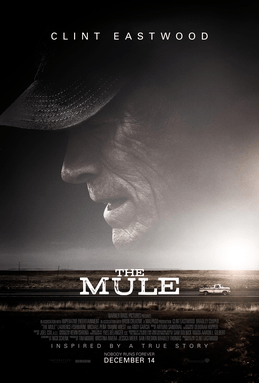
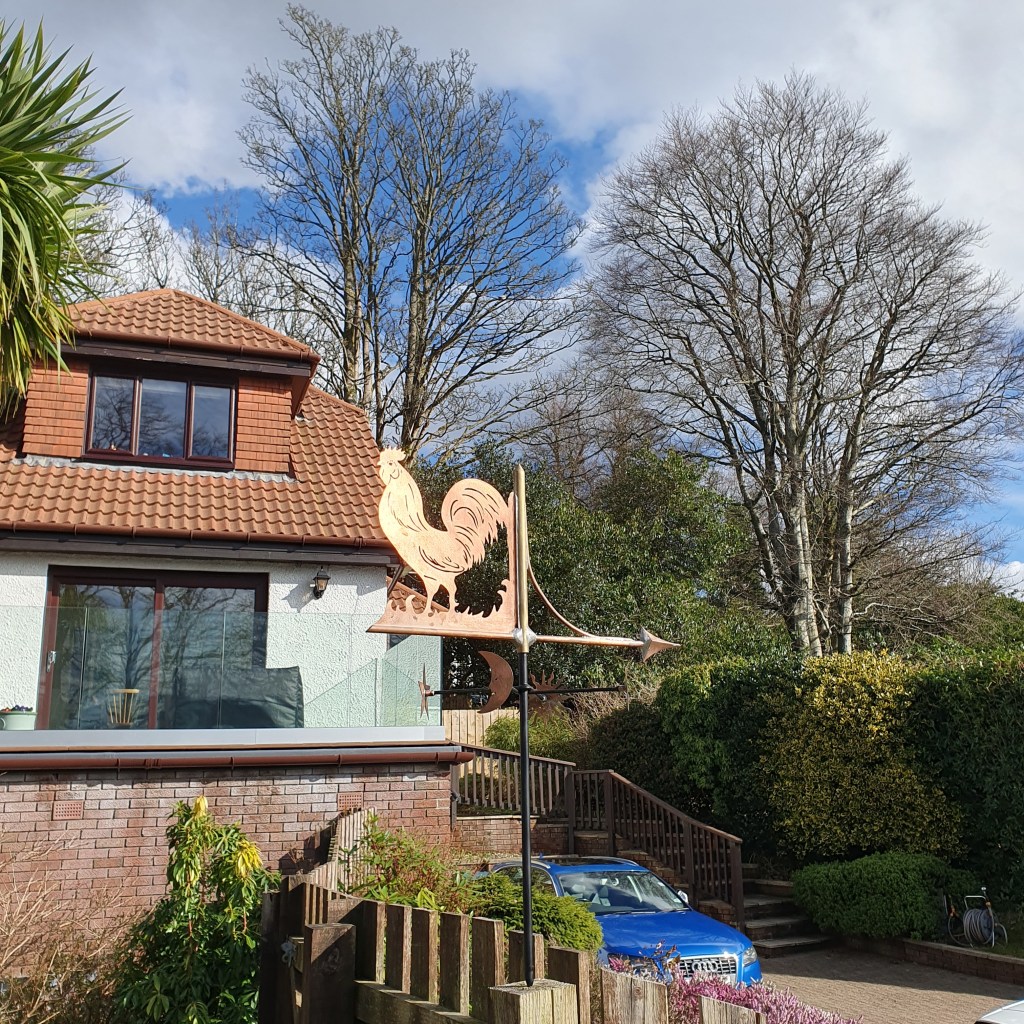
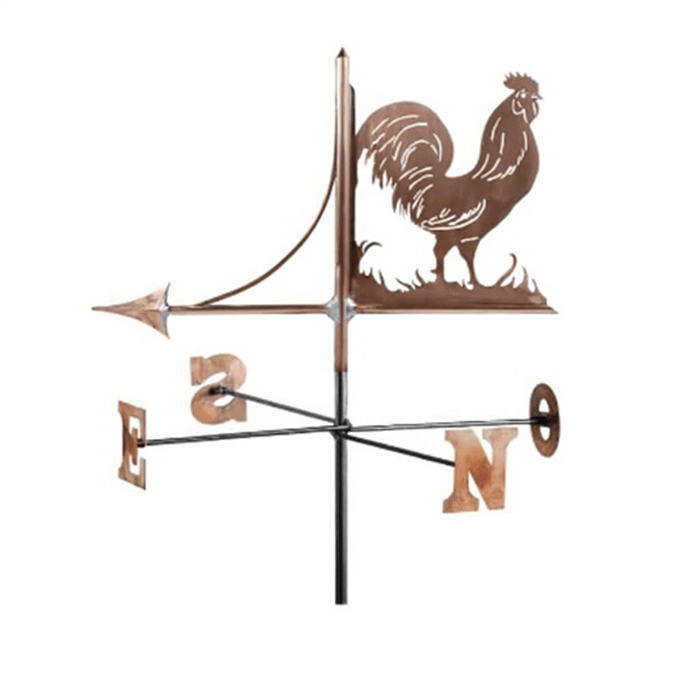

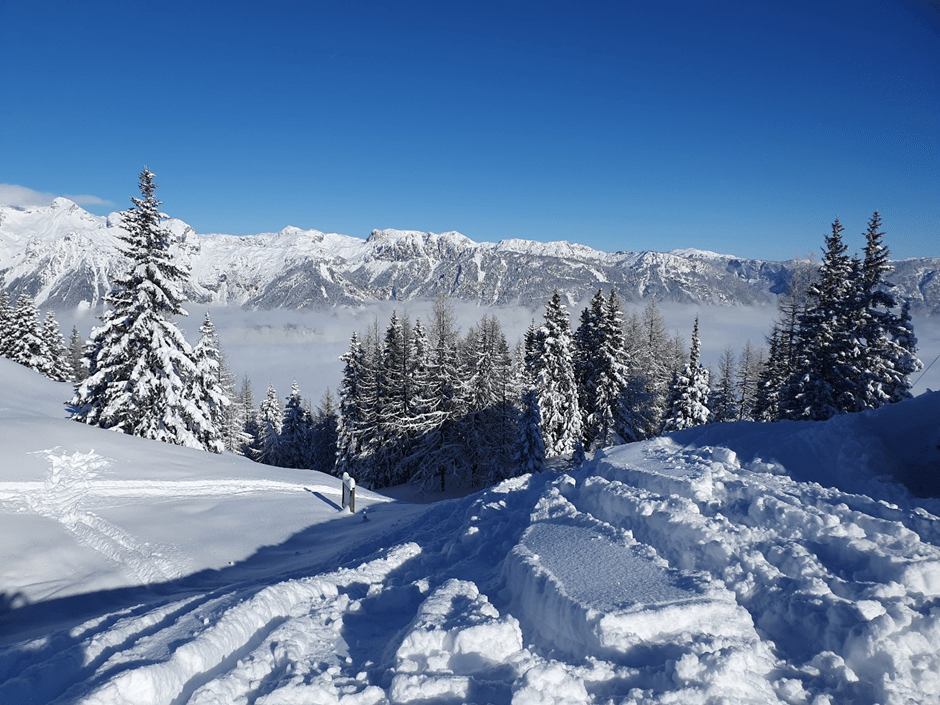
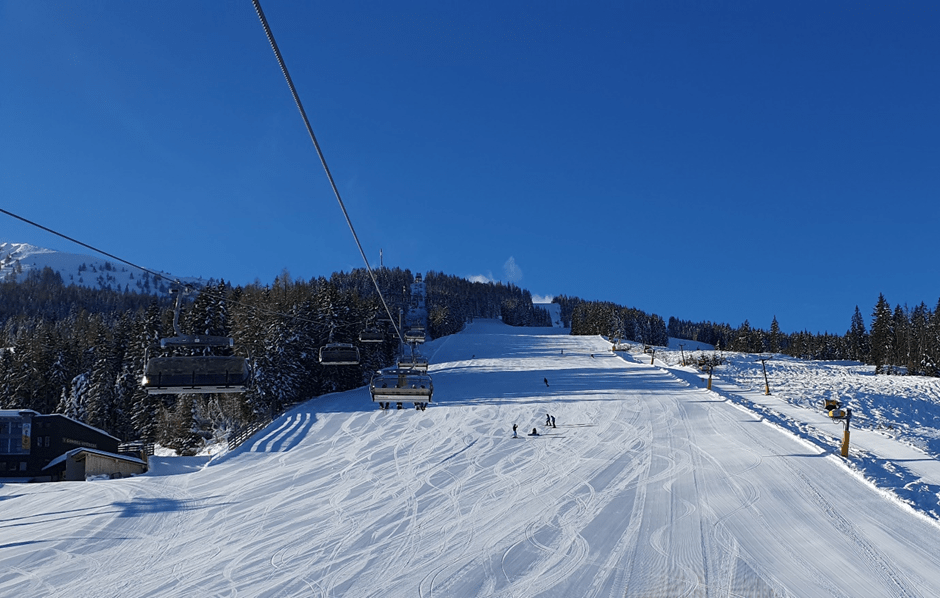

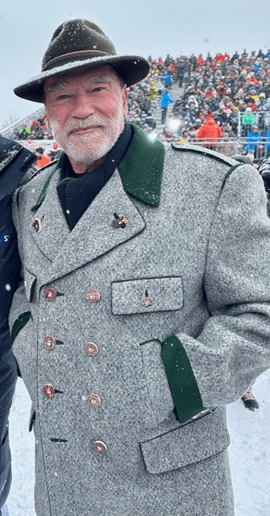
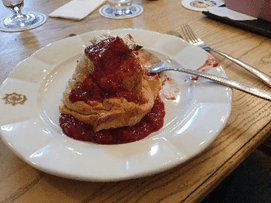

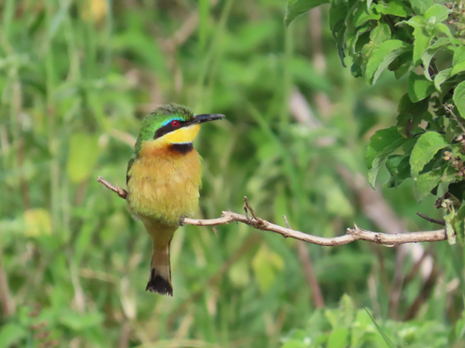

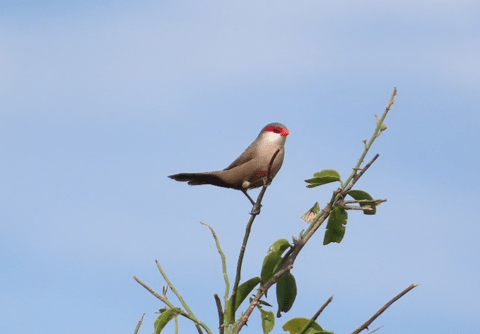
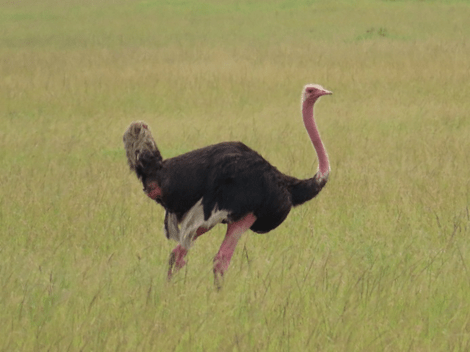


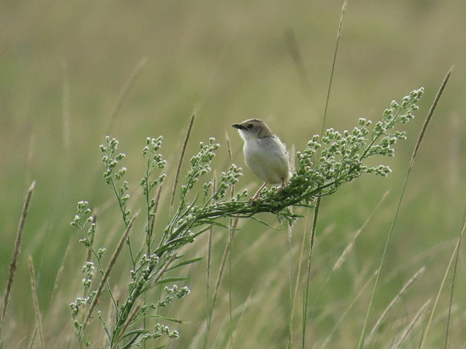
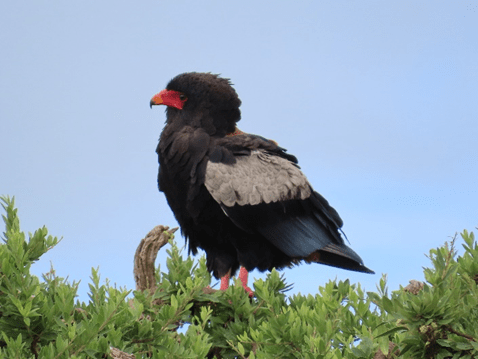

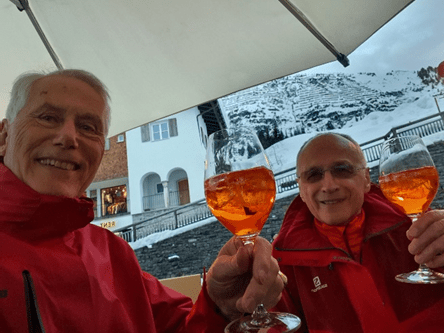
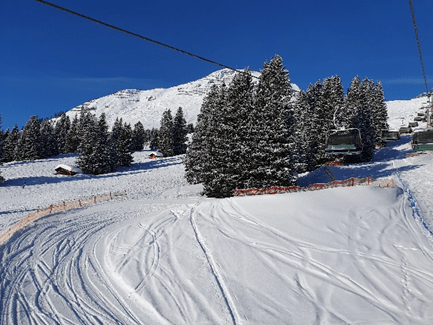
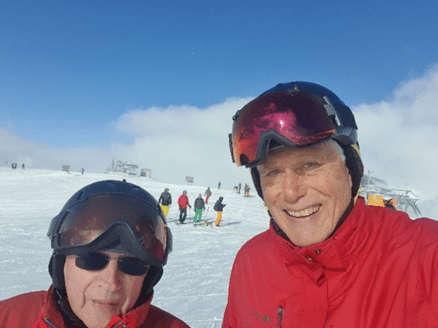
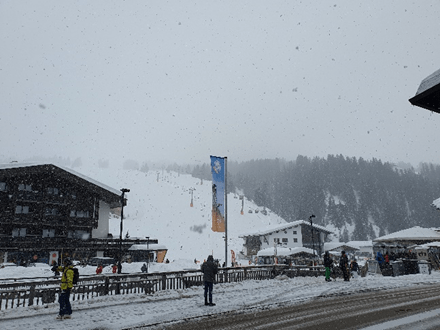
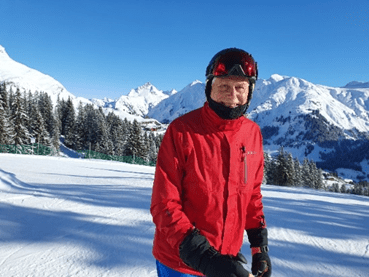


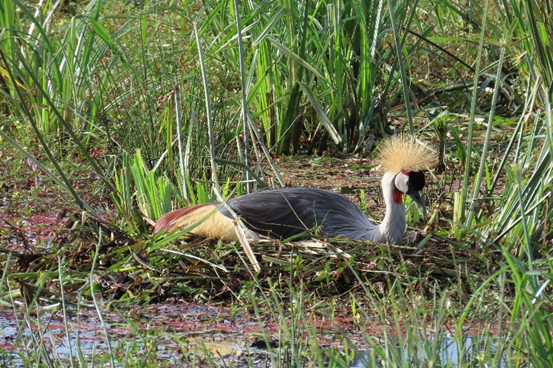
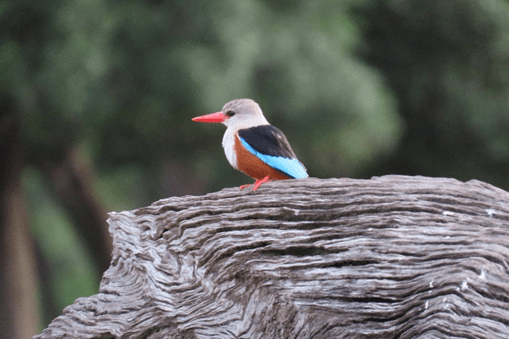


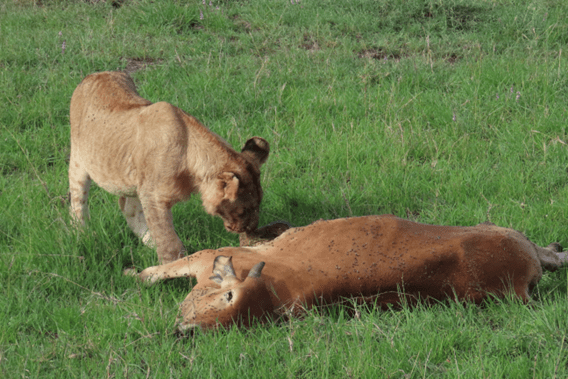

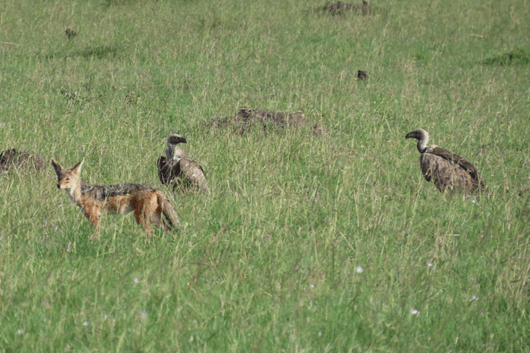


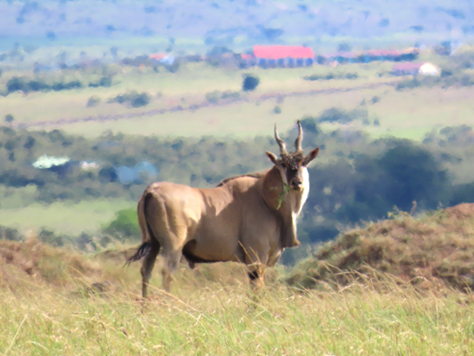
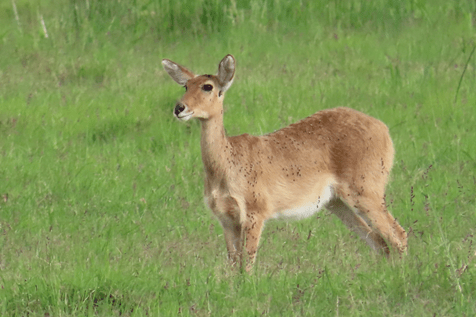
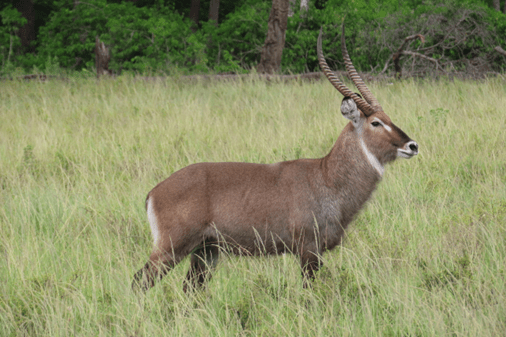


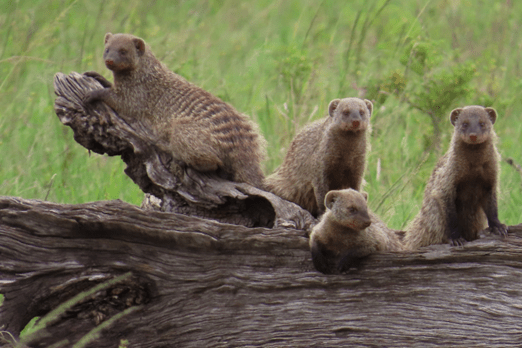

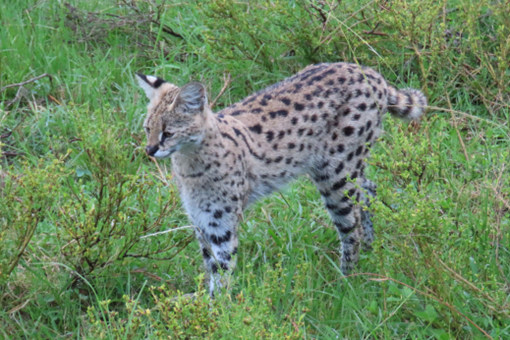
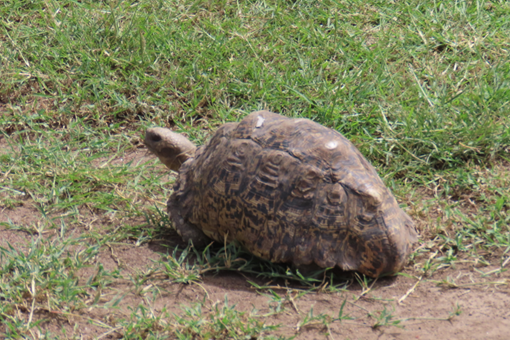

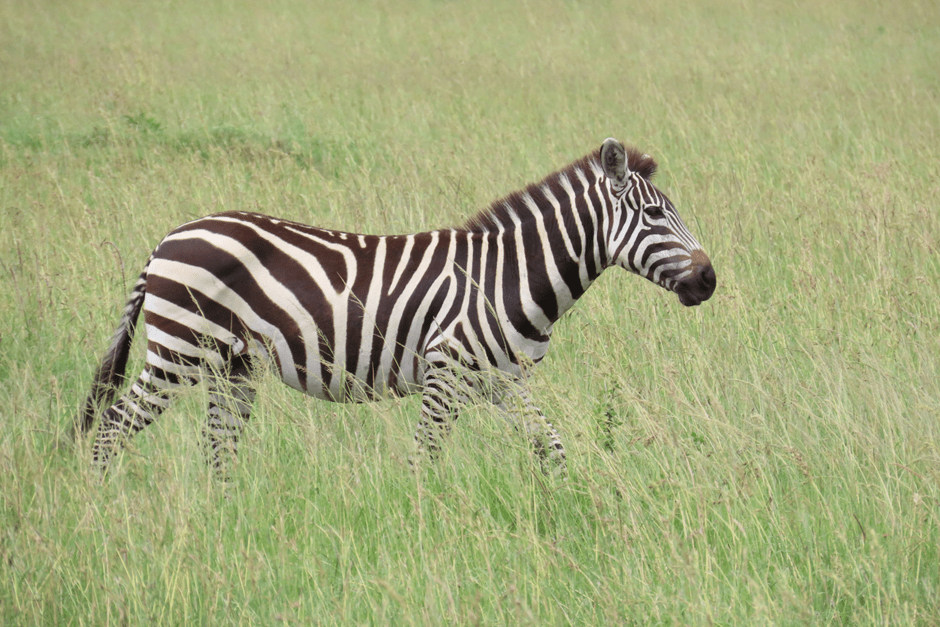


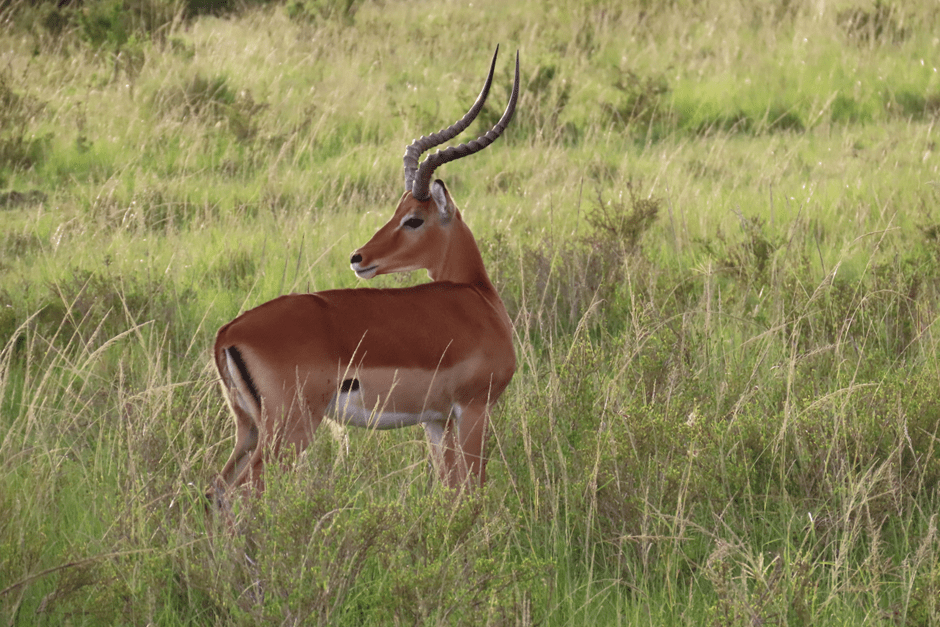
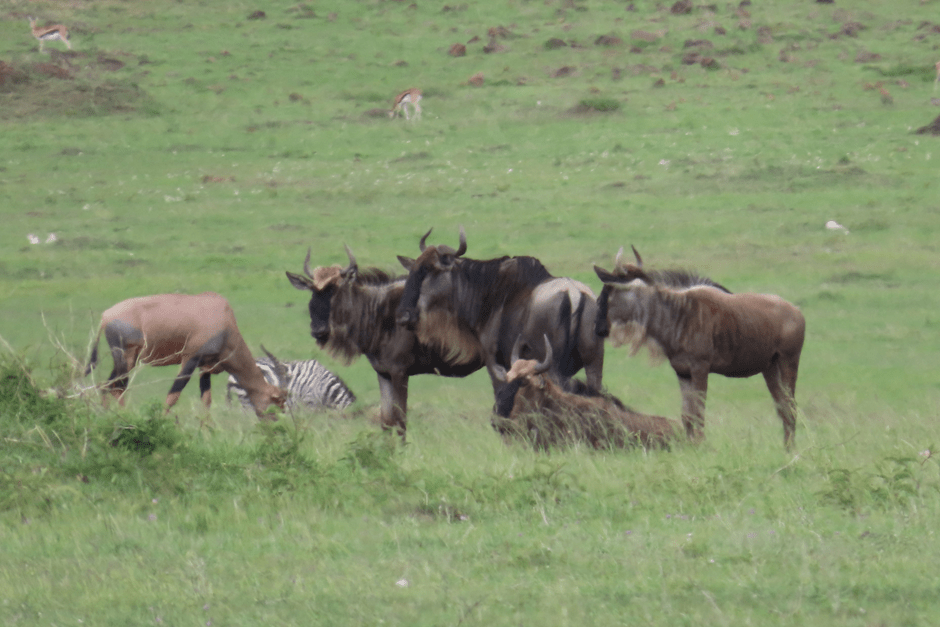
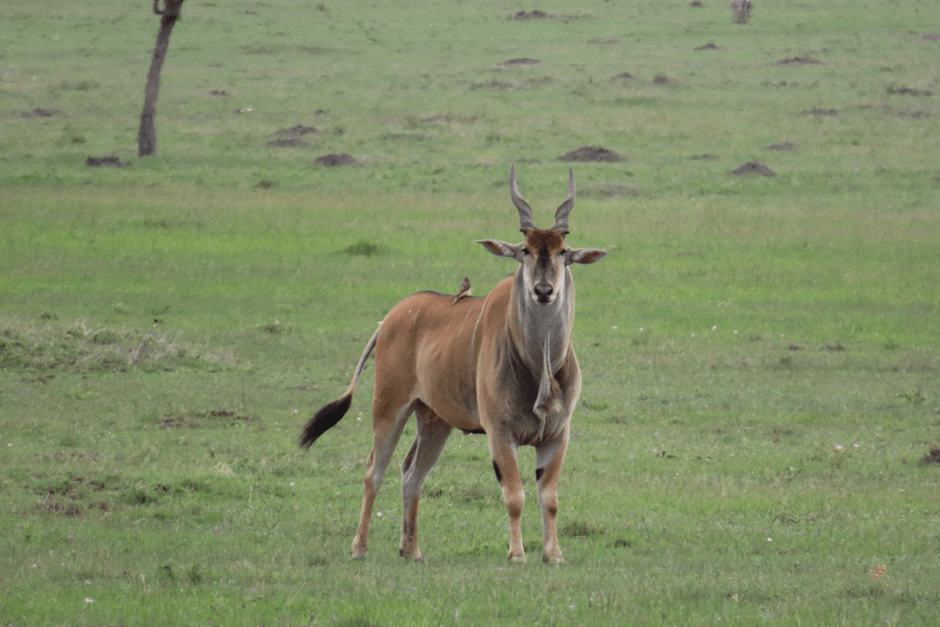
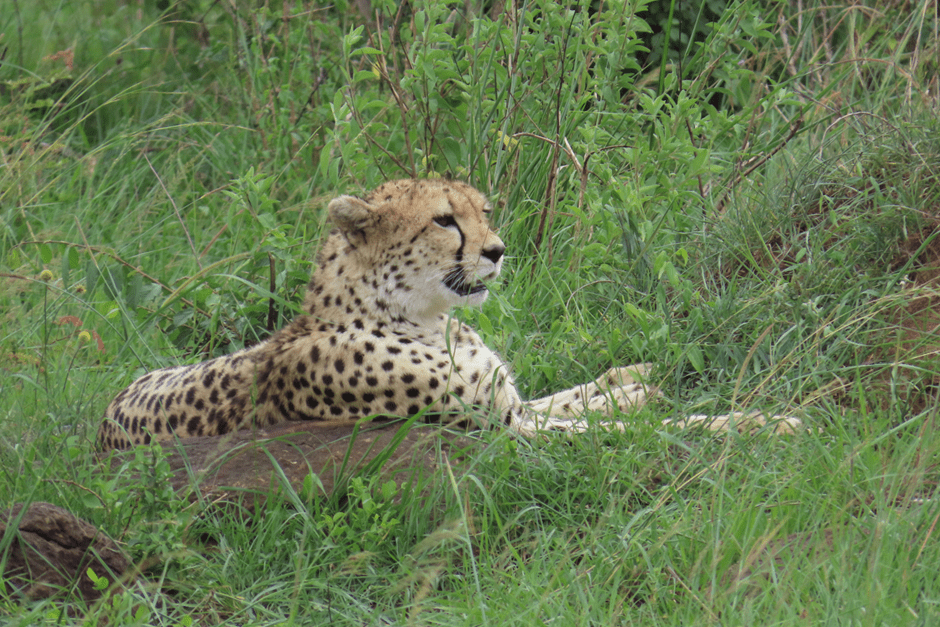


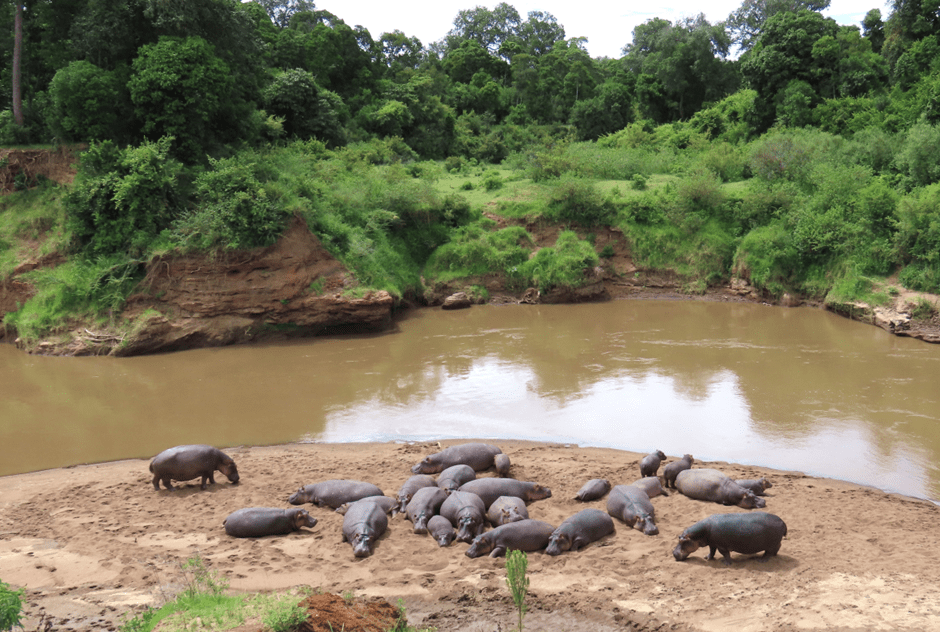
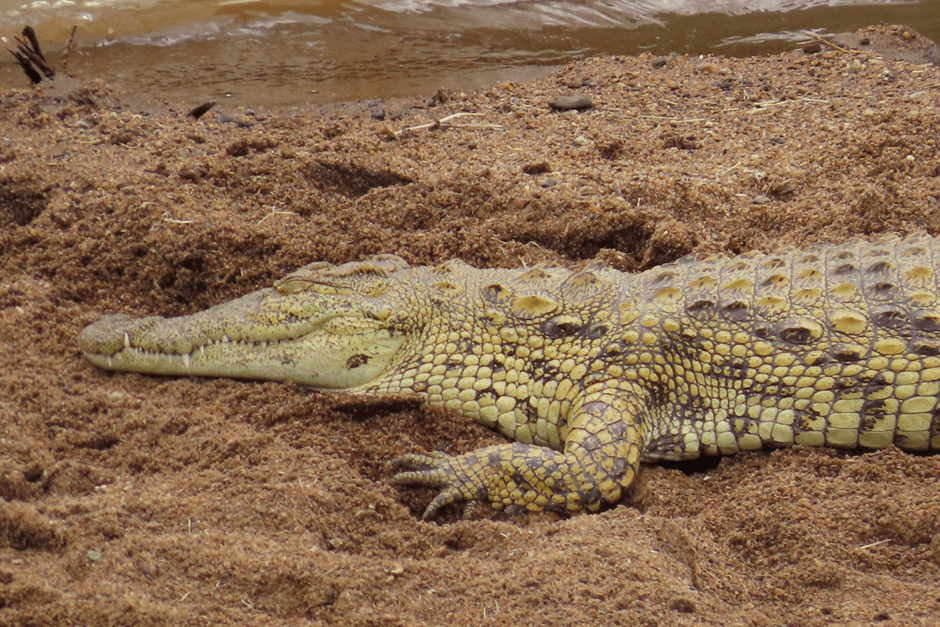


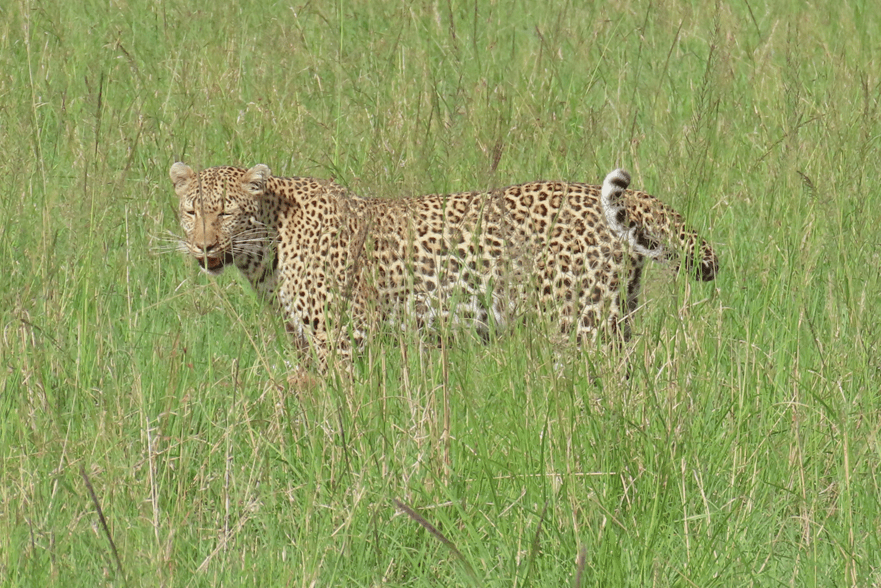
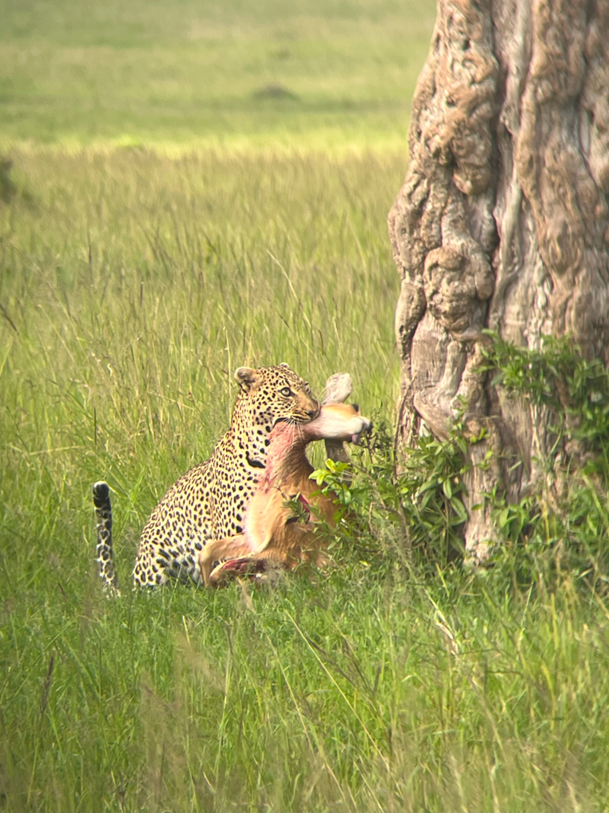
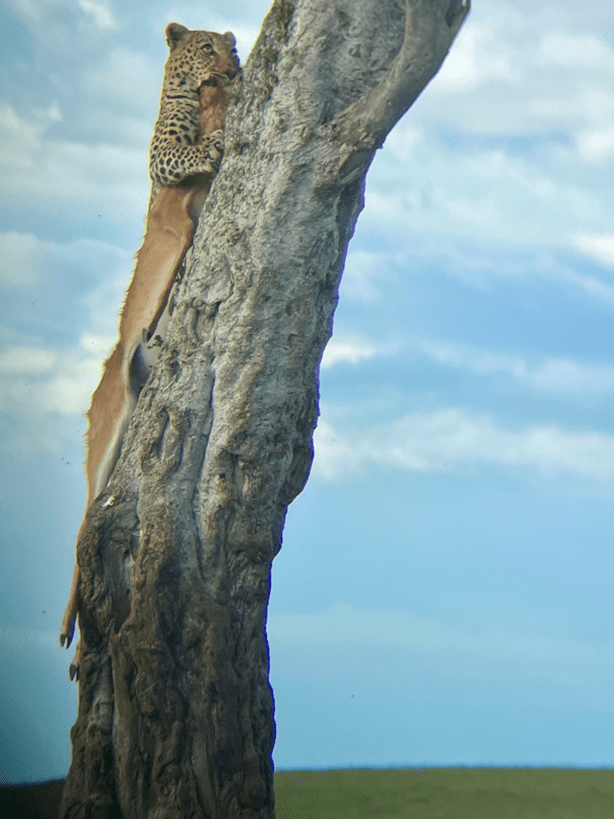
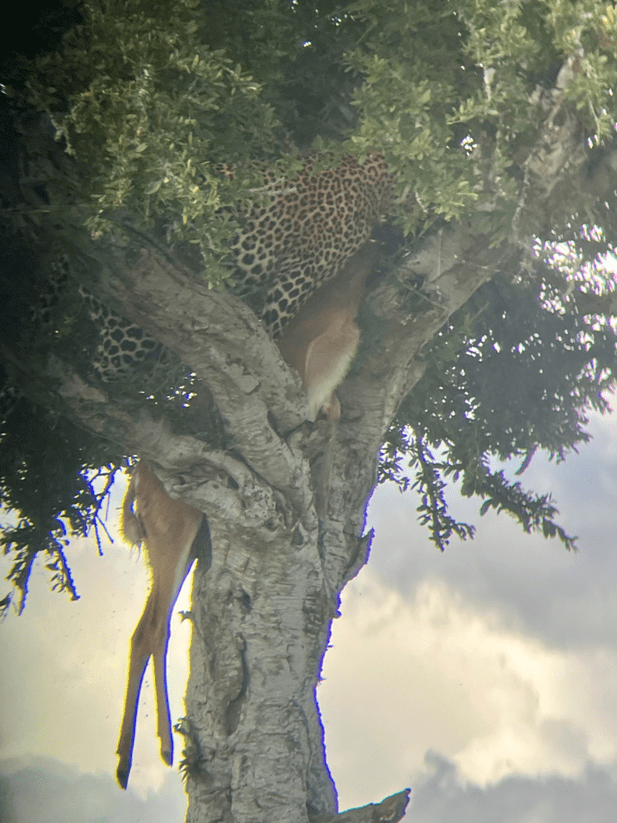
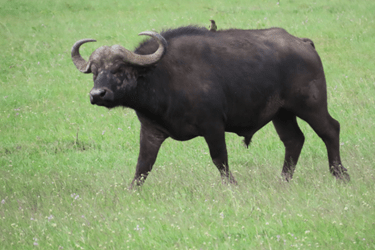
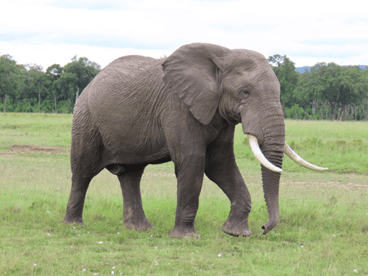

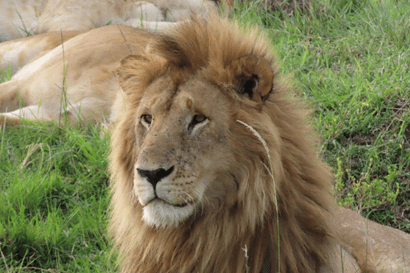


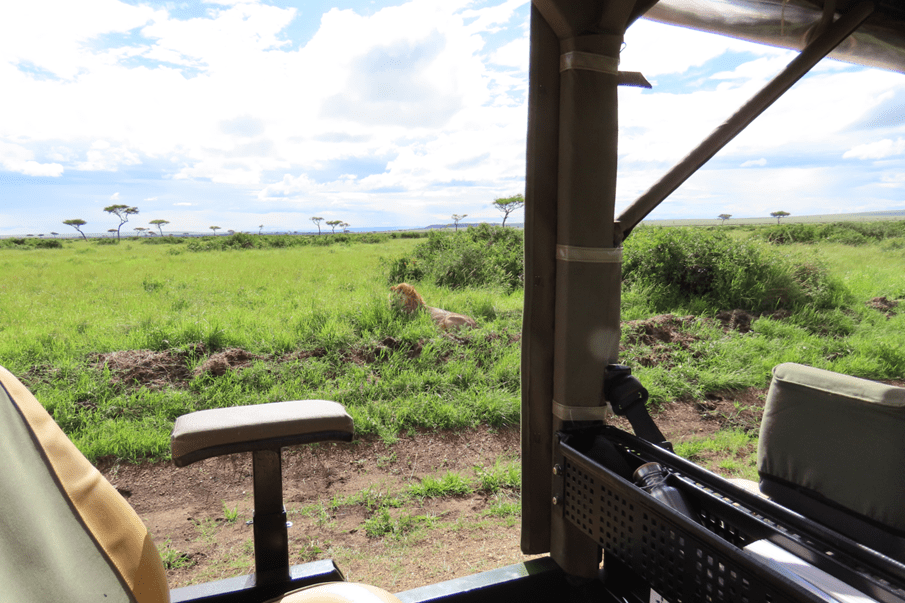
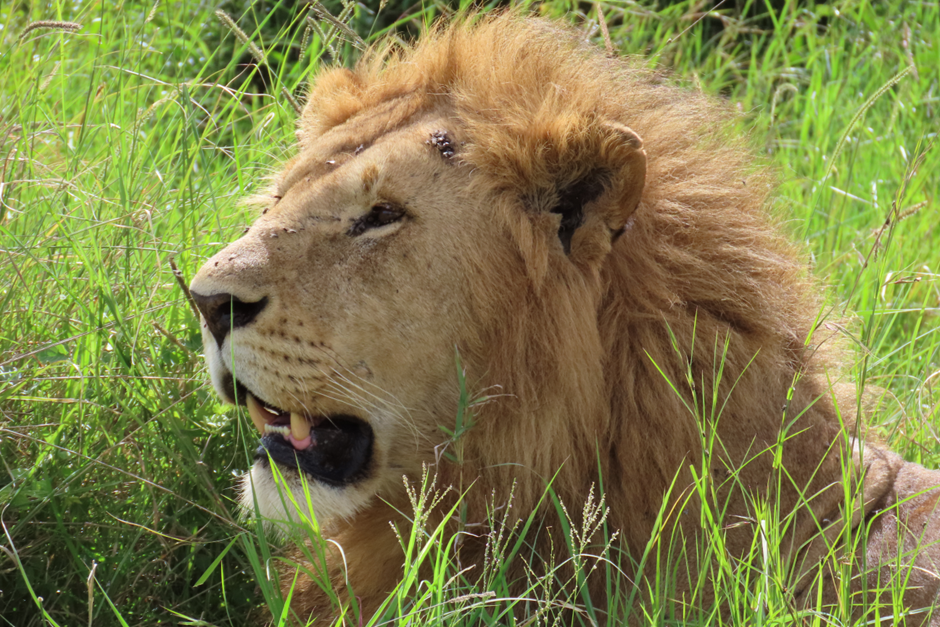

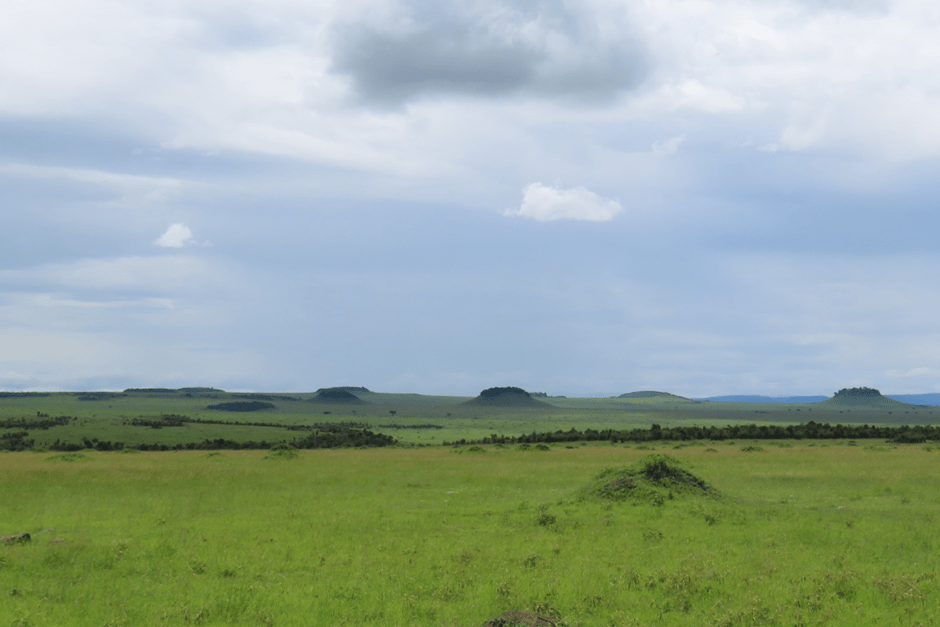
 Pete's Perusings